

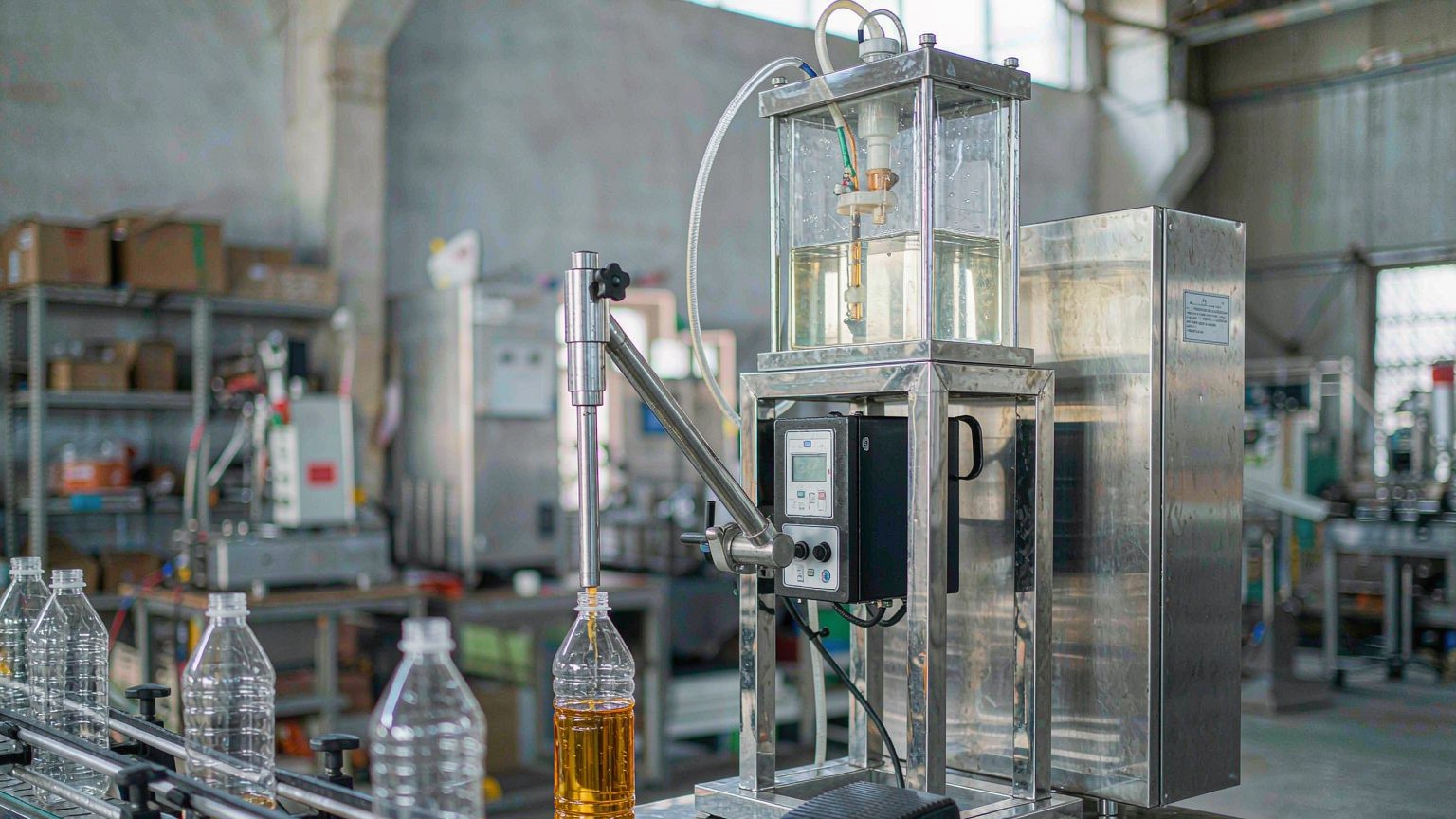
Semi-automatic liquid filling machines handle a wide range of products — cosmetics and household liquids, dairy products, viscous foods such as chilli sauce and mayonnaise, soy sauce and vinegar — and their stainless construction suits food hygiene requirements. They are also simple enough that most faults can be diagnosed and corrected by the operator, provided the checks are done in a sensible order.
1. Poor sealing or leakage
The usual cause is a combination of insufficient mould adjustment and insufficient sealing pressure. Where the seal is also too brief, the material does not fully bond. Increasing the sealing time and checking the mould adjustment and pressure resolves most of these cases.
2. Controls unresponsive during operation
When a function cannot be actuated, the cause is commonly the air supply rather than the control itself — insufficient pressure or an air receiver that is too small to meet demand. Check the supply before looking for an electrical fault.
3. The machine will not fill at all
This requires diagnosis rather than a fix, because different metering methods have different requirements. The relevant checks are the stability of the feed pressure, the uniformity of the medium’s density, and whether the metering components are correctly sized and correctly adjusted for the product being run.
4. Fill settings no longer match the product
Differences in flow behaviour and density between materials mean that a setting validated on one product will not hold for another, and the parameters need to be re-established. It is also worth remembering the trade-off inherent in the machine: increasing filling speed generally reduces accuracy, so a new setting is a compromise rather than a free improvement.
5. A single valve or cylinder is slow or inactive
This points to the control valve. First confirm that the output indicator for that channel — usually on the programmable controller — is operating; if it is not, the problem is upstream of the valve. If the output is present, replace the solenoid coil. If the fault moves when the coil is replaced, the coil was the cause; if it does not, the valve body itself requires attention.
6. The nozzle drips after the machine stops
Two causes account for most post-stop dripping. The first is insufficient system air pressure — check the supply pressure, inspect the supply line for damage, and adjust the regulator at the air inlet to the specified value. The second is a worn injection ball valve, which requires replacement rather than adjustment.
7. Fill volume inaccurate
When the fill is chronically short or long, check the discharge pipe and the outlet of the material tank for debris or blockage and clear it. Material that cannot pass cleanly cannot be measured accurately, and a partially blocked path is the most common reason a machine that was previously accurate stops being so.
The order that works
Supply conditions first, then settings, then the mechanism. Working in that order avoids dismantling components that were never the problem — which on a machine handling food products also avoids disturbing the hygiene status of parts that did not need to come apart.
Need help specifying or upgrading a line?
Send us your product, format and target output per shift. We come back with a station sequence, the tooling list and an indicative price — no obligation.
