

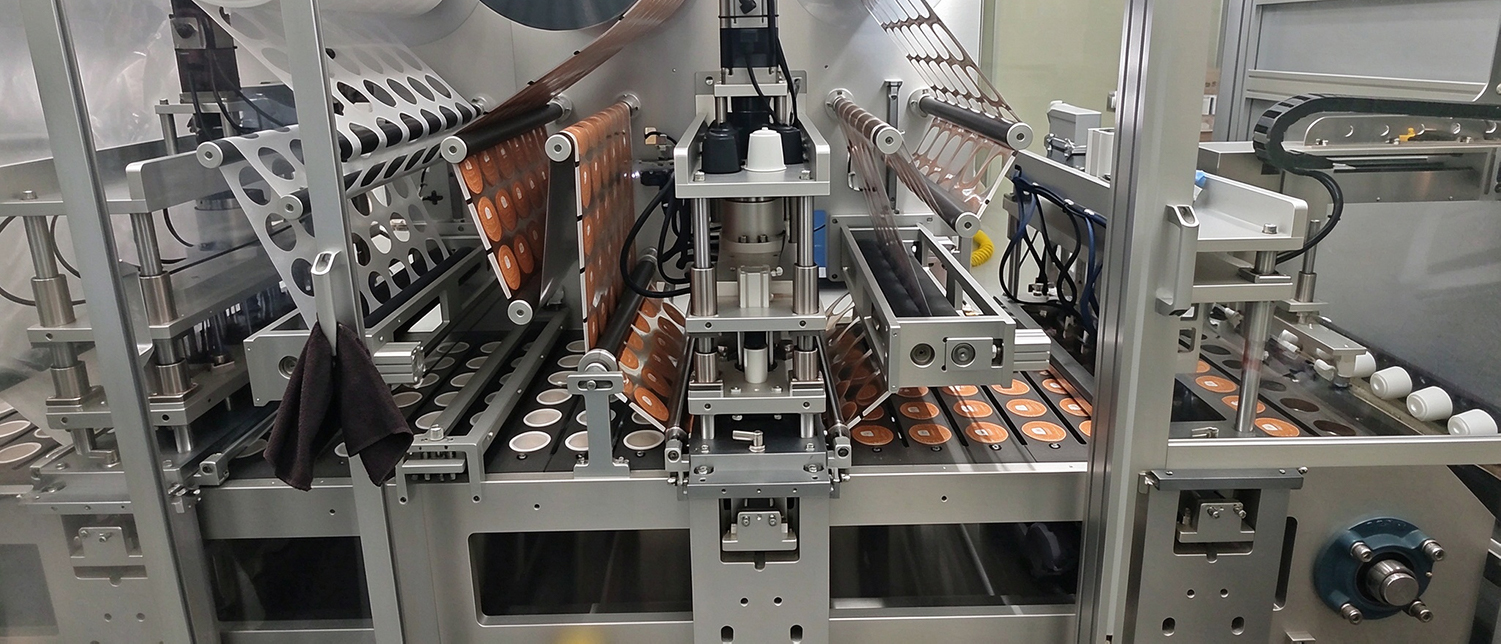
SealFilling supports ground coffee, tea, single-serve pods and ready-to-drink formats with nitrogen-flush and aroma-preserving sealing that protects freshness from factory to shelf. Dosing accuracy and oxygen control are treated as one specification, not two.
±1–2%Dose accuracy
<1%Residual oxygen achievable
N₂ flushStandard on aroma-sensitive lines
Pod / cupMultiple format tooling
Key requirementsWhat this industry demands
Aroma preservationNitrogen flushing and oxygen-barrier structures keep volatile aromatics inside the pack.
Accurate dosingAuger and weigh filling hold single-serve portions within tight weight tolerance.
Format flexibilityPods, capsules, cups, tins, pouches and cartons across the same production area.
Moisture controlSeal integrity and barrier selection prevent moisture migration that dulls flavour.
Packaging processFrom product preparation to finished pack
Product dosingAuger, volumetric or weigh filling to portion spec
Nitrogen flushHeadspace purged before sealing
Cup / pod fillingProduct presented and levelled
SealingHeat seal at validated temperature and pressure
Barrier filmOxygen-barrier or perforated structure applied
Aroma-locked packCoding, checkweigh, transfer to packing
Single-serve capsules, sachets and valve bags all draw on the same dosing and sealing building blocks.
EquipmentRecommended equipment
Packaging materialsMaterials specified with the line
Containers
- PP and PET cups for ready-to-drink coffee and tea
- Capsules and pods for single-serve systems
- Tins and composite cans for ground and bean coffee
- Cartons and pouches for leaf tea and dry blends
Films & closures
- High-barrier films for oxygen and aroma retention
- Aluminium-laminate structures for maximum shelf life
- Anti-static films for powder dusting control
- Perforated films for tea bag and infusion formats
Aroma retention is a line-wide property: dosing precision, seal integrity and headspace management all contribute.
Engineering notesSelection considerations
- Specific gravity and flow characteristics of the dose
- Dusting behaviour and how much product escapes into the seal area
- Residual oxygen target and the resulting barrier requirement
- Portion weight and acceptable variance per serving
- Nesting or stacking behaviour for pods and capsules
- Ambient humidity at the packing location
In coffee packing, product dust trapped in the seal area is the most common cause of micro-channel leaks. We specify an air-knife or brush rim clean before the sealing head on powder filling lines as standard practice.
Build Your Coffee & Tea Packaging Solution
Send your format, dose weight, target residual oxygen and shelf-life requirement. We will specify the dosing, flushing and barrier film combination.