

Practical guides to help you select the right packaging equipment and materials. Each guide sets out the variables that actually decide the outcome, the trade-offs between options, and the information we need in order to give you a specific recommendation rather than a general one.
10In-depth buying guides
SelectionVariables covered per guide
No costFree to use
EngineerWritten by our application team
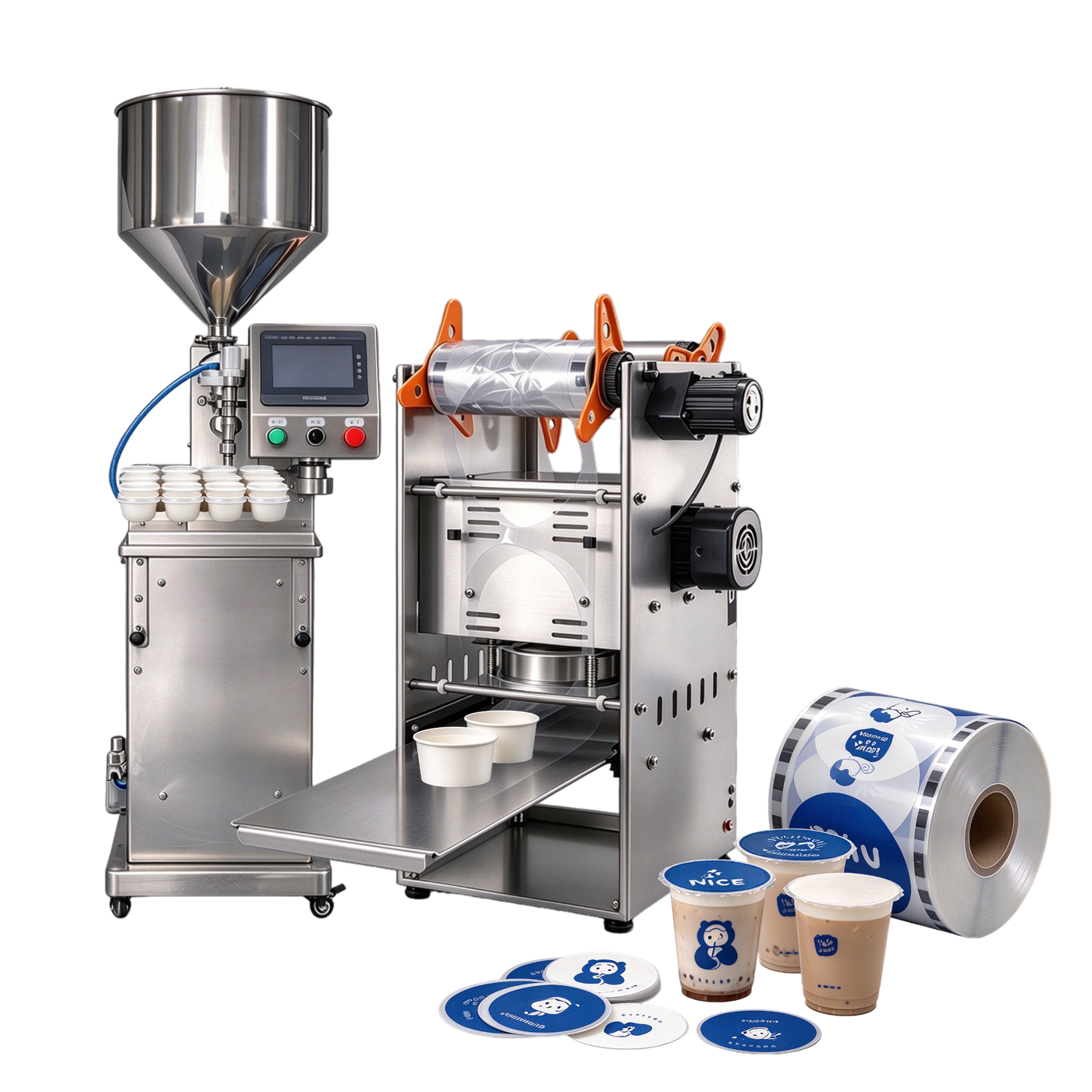
A typical SealFilling cup filling and sealing line — servo dosing, printed-film sealing and inline coding on a single stainless-steel frame. Tooling changes convert the same platform to trays, containers and pouches.
How to use these guidesStart with your constraint, not the machine
01
Identify the fixed constraint
A container you already own, a factory footprint, a supply voltage or a shelf-life target usually removes most options immediately.
02
Decide the accuracy class
Fill accuracy and seal integrity determine which families of equipment are even candidates.
03
Then compare capacity
Only compare output figures between options that already satisfy your accuracy and constraint requirements.
04
Validate before committing
Ask for a trial on production samples — a seal window confirmed on your product is worth more than any specification sheet.
Buying guidesSelect a guide by topic
Buying GuideHow to Choose a Cup Sealing MachineA structured walkthrough of the variables that decide cup sealer selection — rim diameter and tolerance, fill volume, product temperature, film format and output target.What this guide coversReading cup rim specificationsMatching lanes to upstream outputPre-cut versus roll-fed film economicsValidating the seal windowCup Sealing Machines →
Buying GuideAutomatic vs. Semi-Automatic Sealing MachinesWhere the break-even actually sits between semi-automatic and automatic sealing, and why labour consistency often matters more than headline speed.What this guide coversOutput ranges and realistic throughputLabour and consistency trade-offsChangeover and tooling implicationsSelecting the automation levelSealing Machines →
Buying GuideHow to Choose a Filling MachineProduct viscosity, accuracy class and container type drive filling selection. This guide maps product behaviour to the right dosing system.What this guide coversMatching viscosity to dosing methodUnderstanding fill accuracy classesNozzle and pump selectionHandling particulates and aerationFilling Machines →
Buying GuideSelecting a Sealing FilmFilm choice often determines shelf life more than the machine does. Learn how barrier, sealant chemistry and peel behaviour are specified together.What this guide coversBarrier levels and shelf-life targetsSealant layers and container materialsPeel strength for consumer openingAnti-fog and retort structuresSealing Films →
Buying GuideTray Sealing: MAP, Vacuum or Skin PackThree sealing technologies solve three different problems. This guide explains which one matches your product, shelf life and presentation requirement.What this guide coversHow gas flushing extends chilled lifeSkin pack for premium presentationTray material and flange requirementsTooling and changeover planningTray Sealing Machines →
Buying GuideCup Packaging Formats: PP vs PET vs PaperMaterial selection affects fill temperature, clarity, recyclability and cost. Compare the three main cup materials against your product and market.What this guide coversTemperature resistance and hot fillClarity and retail presentationRecyclability commitmentsCost per unit at volumePackaging Cups →
Buying GuideSpecifying a Filling & Sealing LineHow to define an integrated line — stage by stage — so capacity, staffing and changeover all balance rather than leaving one stage as the bottleneck.What this guide coversLine balancing and bottleneck analysisAutomation levels and labourUtility and footprint planningAcceptance criteria and handoverFilling & Sealing Lines →
Buying GuideContainer Packaging: Jars, Tubs and BottlesContainer geometry and closure specification drive filling and capping selection. A practical guide to setting the specification before you buy.What this guide coversRim tolerance and seal qualityClosure torque and tamper evidenceAnti-drip and suck-back fillingHandling irregular containersContainer Sealing Machines →
Buying GuideCustom Packaging: From Concept to ToolingWhat a custom packaging project actually involves, how long each stage takes, and where the cost really sits between concept and series production.What this guide coversSetting the design briefFlange and stacking engineeringMaterial and sustainability routesSampling and tooling investmentCustom Packaging →
Buying GuideOEM / ODM: Structuring a Private-Label ProgrammeFor machinery brands and distributors evaluating a private-label supply programme — what to agree, document and validate before committing to volume.What this guide coversOEM versus ODM engagement modelsDocumentation and certification scopePilot batch and ramp planningSpare parts and after-sales routingOEM / ODM →
Start by fixing the pack format — it narrows the machine shortlist faster than any other decision.
Related resourcesMore ways to specify your solution
Packaging KnowledgeConcept-level explanations of sealing, filling, containers and packaging materials.Explore knowledge →
Frequently Asked QuestionsDirect answers on machine selection, materials, customization and delivery.Read the FAQs →
Need a Recommendation Rather Than a Guide?
Tell us your product, container and production target. We will apply the same selection framework these guides describe — but to your specific requirement, with a concrete equipment proposal.
When comparing sealing options, compare the film structure and the seal window together, not the headline speed alone.