

SealFilling serves snacks, beverages, sauces, cereals and prepared foods with filling and sealing systems that protect flavour, texture and shelf life while meeting food-safety requirements. The line is configured around your product’s rheology and the hygiene class your market expects — from ambient dry goods through to hot-fill and chilled products.
500–12,000Units per hour
±0.5%Fill accuracy achievable
60+Export markets served
Food-gradeStainless-steel contact parts
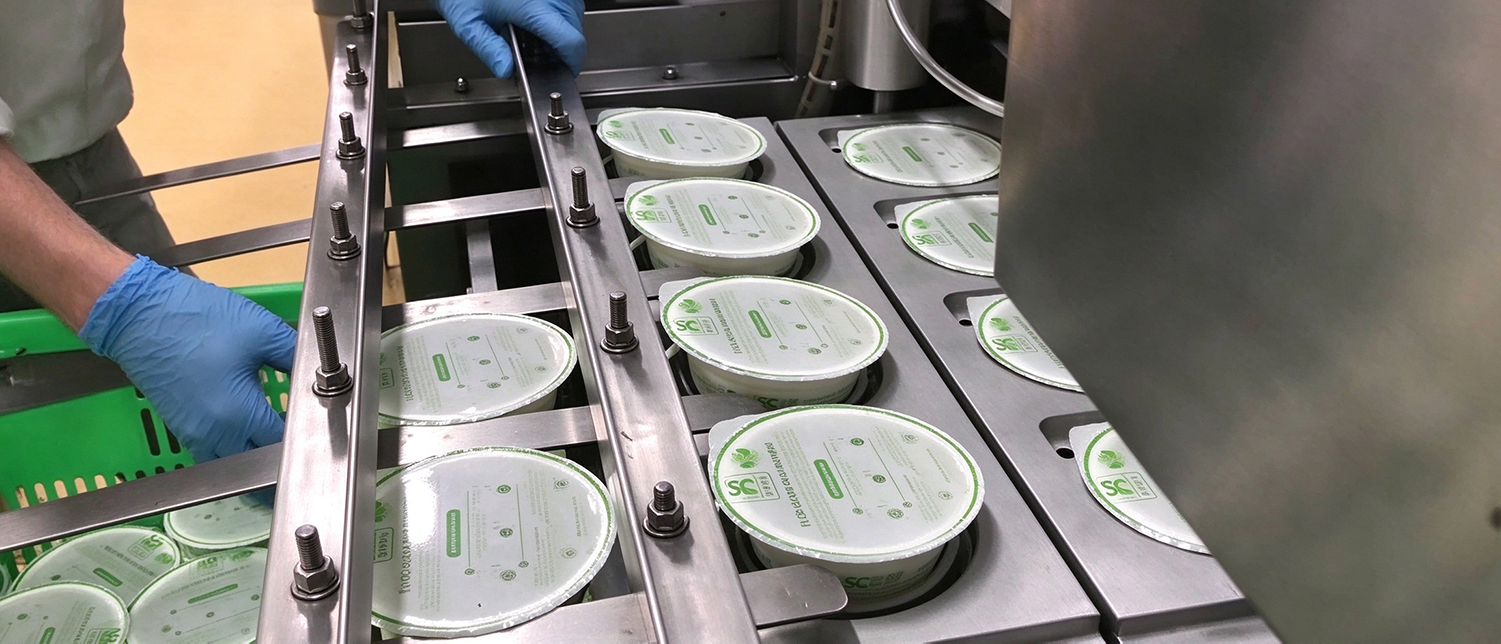
SealFilling filling and sealing line

Key requirementsWhat this industry demands

Hygiene by designFood-grade stainless-steel contact parts, sloped surfaces and tool-free dismantling for fast sanitation.
Gentle handlingLow-shear dosing for particulate, fragile and aerated products without crushing or separation.
Airtight sealingHeat, induction or ultrasonic sealing validated to hold flavour and extend ambient shelf life.
Format rangeCups, trays, jars, bottles, pouches and boxes across multiple SKUs on one platform.

Packaging processFrom product preparation to finished pack

Product preparationTemperature, viscosity and aeration verified against spec
FillingVolumetric, piston or weigh dosing selected to the product
ContainerCup, tray, jar, bottle or pouch presented and indexed
SealingHeat, induction or press seal at validated window
Film / closureMatched structure applied and registered
Finished packCoding, checkweigh and transfer to secondary packing
FILLING & SEALING LINE — TYPICAL STATION SEQUENCE01Product feedHopper / pump02FillerVolumetric / piston03SealerHeat / ultrasonic04CodingDate & batch05InspectionSeal + fill check06Case packCarton / palletConfigured per product rheology, pack format and required output.
Typical station sequence for a snack or prepared-food line. Each station is specified against your product rheology and pack format.

EquipmentRecommended equipment

Liquid Filling MachinesBeverages, oils, sauces and free-flowing liquids.Explore →
Paste Filling MachinesSauces, purées and semi-solid food products.Explore →
Sealing MachinesCup, tray and container sealers for food formats.Explore →
Filling & Sealing LinesIntegrated lines for volume food production.Explore →

Packaging materialsMaterials specified with the line

Containers

  • PP, PET and paper cups for single-serve formats
  • CPET, APET and PP trays for meals and produce
  • Glass and PET bottles for liquids and sauces
  • Cartons and pouches for dry goods and snacks

Films & closures

  • Airtight lidding films for cup and tray formats
  • Barrier films for oxygen- and moisture-sensitive products
  • Peelable and resealable lids for consumer convenience
  • Print-registered film for retail brand presence
SEALING FILM — FUNCTIONAL LAYER STACKOuter print layerBOPP / PET — brand & regulatory printAdhesive tie layerSolvent-free laminationBarrier layerAlOx / EVOH — oxygen & aroma barrierSealant layerCo-extruded PE — peel or weldSelection driversProduct acidity & fat contentRetort or ambient shelf lifeTarget peel forceMigration complianceSeal-through contaminationLine speed & dwell windowSpecified per product, not per machine.
A sealing film is engineered as a stack of functional layers. The barrier and sealant layers are what set shelf life and peel behaviour.

Engineering notesSelection considerations

  • Product pH and whether hot-fill or ambient filling applies
  • Particle size and whether low-shear handling is required
  • Required shelf life and the barrier level that delivers it
  • Target market food-safety standard and audit expectation
  • Changeover time between SKUs in the same production week
  • Cleaning regime and changeover chemistry compatibility

For food and beverage lines, seal integrity is the single largest driver of shelf-life complaints. We validate the seal window — temperature, pressure and dwell — on production samples before shipment, then record the parameters as a recipe the line recalls automatically.

Build Your Food & Beverage Packaging Solution

Send your product samples, pack format and target shelf life. We will specify the filling method, sealing window, film structure and line capacity for your range.