

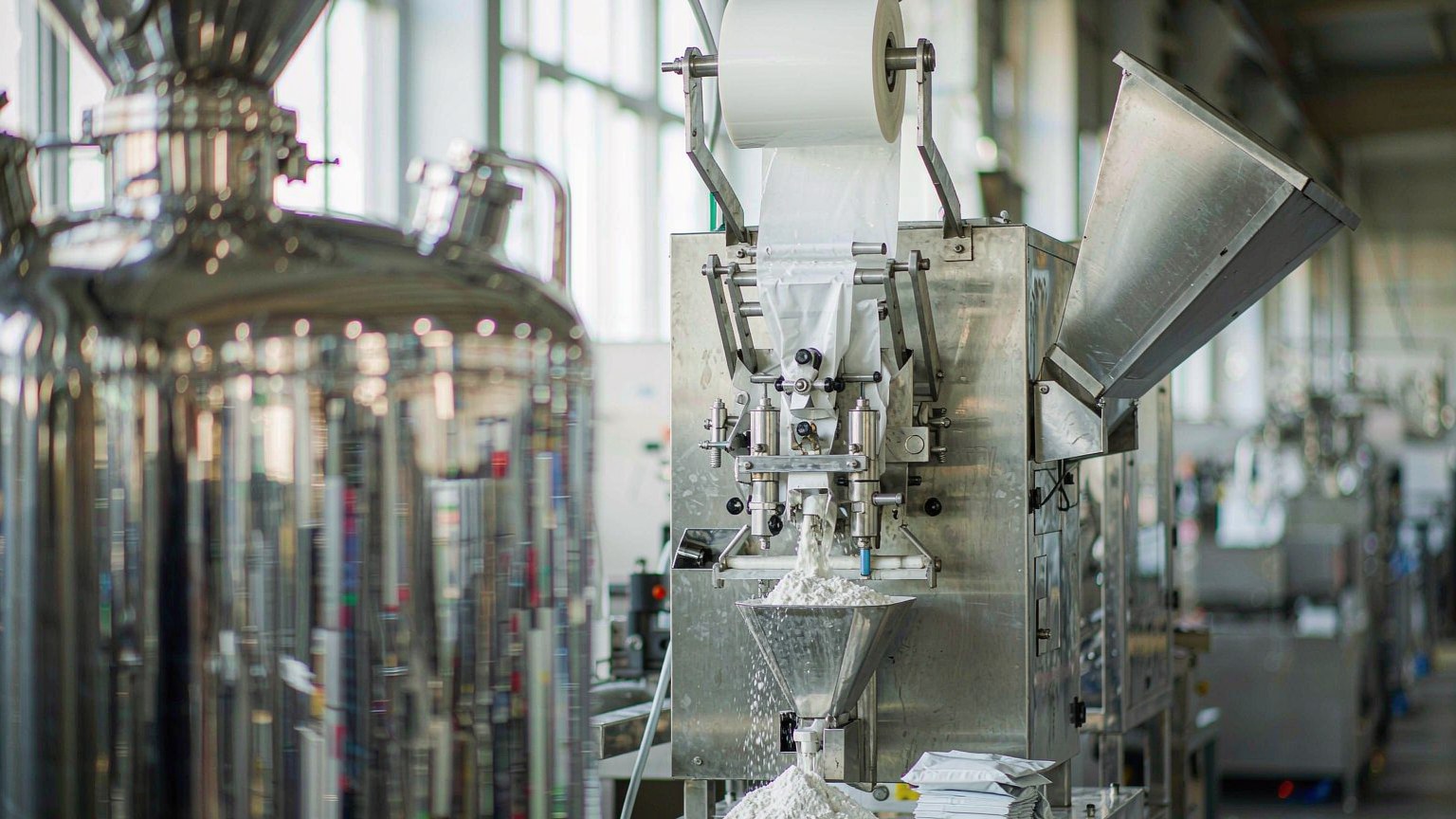
Powder filling and sealing machines serve food, pharmaceutical and chemical production, and the differences between one powder and another matter more than the differences between machines. Getting good results requires matching the machine settings to the material in front of you and controlling the two hazards that powder brings with it: dust and static.
Preparing the machine
Before start-up, confirm that supply conditions are stable — voltage and air pressure both — because fluctuation in either produces faults that look like machine problems and are not. Where food or pharmaceutical standards apply, carry out the cleaning-in-place or standard cleaning procedure to prevent cross-contamination between products. Then verify the metering system: weighing sensors or volumetric mechanisms should be calibrated so that the dose accuracy stays within about one percent, and the calibration should be checked rather than assumed.
Matching the machine to the powder
Powders differ in flow behaviour and density — milk powder, coffee powder and additives behave nothing alike — and the machine has to be adjusted for each. That means setting the vibration feeder, the screw rotation speed or the gas-flushing parameters to suit the material, so that it neither blocks nor fills unevenly. Then set the sealing parameters for the packaging material. Heat-sealed machines need a temperature chosen for the specific structure, because too hot burns through and too cold leaves an incomplete seal; ultrasonic sealing needs its frequency and pressure set for the film, and it is the better choice for heat-sensitive materials. Where the packaging has a barrier requirement, flushing with nitrogen before sealing extends shelf life and stabilises the product.
Controlling dust
Powder dust is not merely untidy: it accumulates on sensors and motors and degrades their performance, and at sufficient concentration it is an explosion risk. Machines should be fitted with extraction — a negative-pressure dust collection arrangement — and the filters maintained. Products that absorb moisture readily, such as protein powder, are best handled in a low-humidity environment or with nitrogen protection, because damp powder both bridges in the feed system and seals badly.
Maintenance and safety
Lubricate guide rails and bearings with a food-grade lubricant suited to the application, and inspect the parts that fail first: sealing dies, which collect residue that carbonises and degrades every subsequent seal, and photoelectric sensors, whose lenses must be kept clean because a false reading misaligns the pack. Use the PLC or connected monitoring to track machine state, so that conditions such as motor overheating or abnormal air pressure are flagged before they cause a stoppage. On the safety side, test the emergency stop and ensure that flammable powders — milk powder and cocoa powder among them — are handled with proper earthing to prevent static discharge, and that operators wear dust masks to avoid long-term inhalation of fine particles.
When something goes wrong
Two faults account for most problems. An incomplete seal points to sealing temperature, sealing pressure or a worn die. A loss of dosing accuracy points to a fouled screw or a sensor that needs recalibration. In both cases, isolate power and air before investigating; forcing a machine that is already misbehaving is how a small fault becomes an expensive one.
Need help specifying or upgrading a line?
Send us your product, format and target output per shift. We come back with a station sequence, the tooling list and an indicative price — no obligation.
