

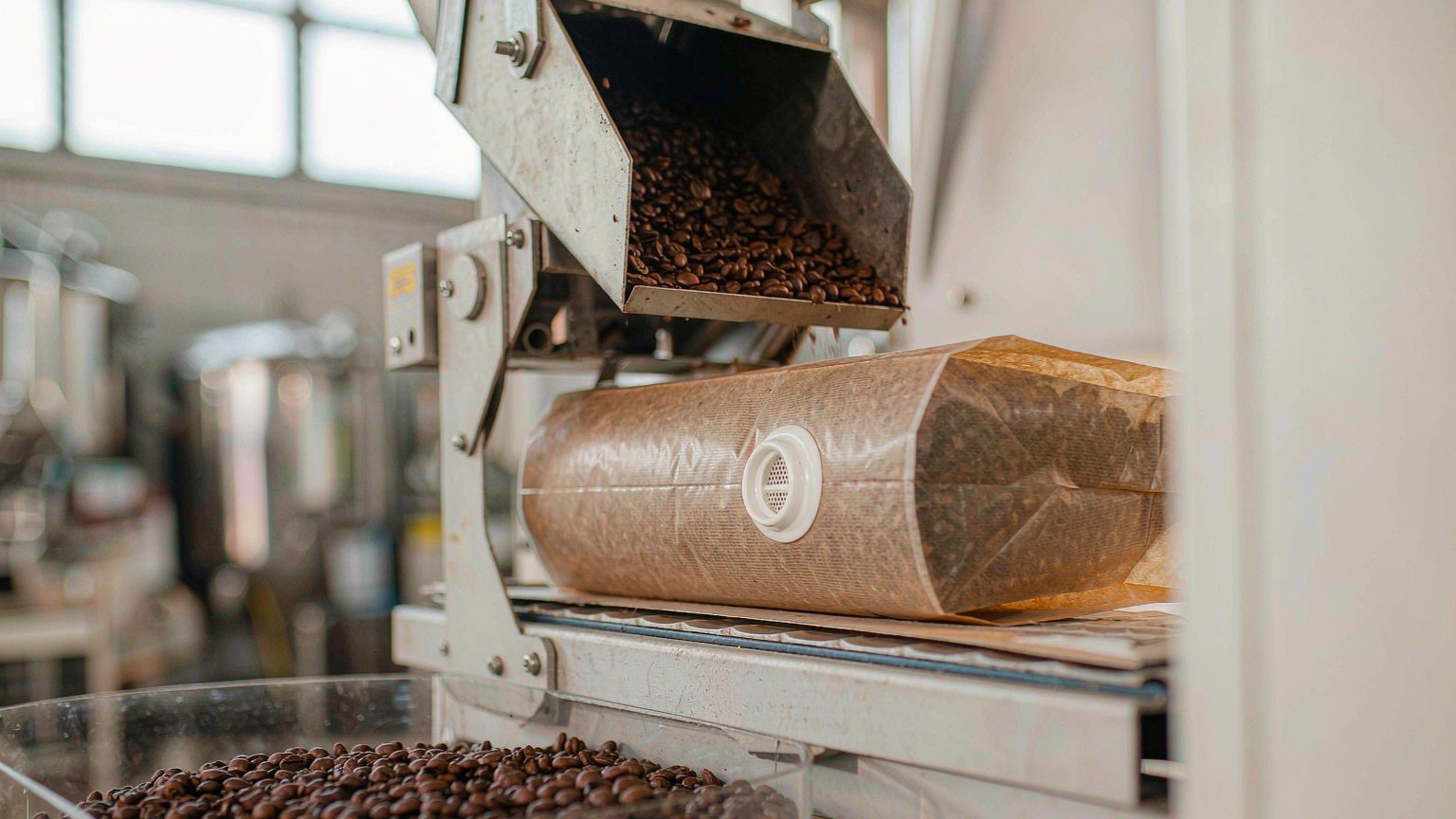
As coffee consumption has grown and product formats have multiplied — ready-to-drink coffee, cold brew concentrate, canned and bottled variants — the requirement on production has shifted from making coffee well to making the same coffee well, thousands of times, in several different packages. That is a systems problem, and an integrated filling and sealing line is the answer to it.
Efficiency and cost control
An integrated line automates the whole sequence: bottle rinsing and sterilising, nitrogen flushing, measured filling, capping or sealing, labelling, coding and case packing. Because human intervention is reduced to supervision, labour cost and human error both fall, and the line runs continuously at a speed and stability that a collection of stand-alone machines cannot match. Integrated lines are also easier to cost: the throughput is known, the labour content is known, and the unit cost is therefore predictable rather than variable.
Quality, and specifically oxidation
Coffee is particularly vulnerable to oxygen and to microbial contamination, especially in liquid form. An integrated line builds protection into the sequence rather than around it. Nitrogen flushing before filling displaces the oxygen in the package, which extends both shelf life and flavour stability. Precise temperature control during filling, combined with sealing immediately after, locks in the aroma volatiles. And because the product travels through closed pipework from processing to pack, the opportunities for contamination are limited to a small number of controlled points. Every parameter is measured and recorded, so quality is traceable rather than asserted.
Flexibility for a fast-moving market
Modern lines are built modularly and controlled through software, which means format changes are made by changing filling valves and sealing heads and recalling parameters rather than by rebuilding. The same line can run small bottles and large sharing formats, glass, PET and aluminium cans, and products from concentrate to milk-based coffee drinks. That flexibility is what makes small-batch product trials and rapid market launches feasible — a brand can test a new variant at low volume and scale it without changing its production base.
What the investment actually buys
Buying an integrated line is not buying a group of machines. It is buying a production system that combines throughput, quality control and supply flexibility in one installation. For a coffee business moving from scale toward brand building, that system is the foundation: it determines what the brand can promise and whether it can deliver the promise consistently.
Need help specifying or upgrading a line?
Send us your product, format and target output per shift. We come back with a station sequence, the tooling list and an indicative price — no obligation.
