

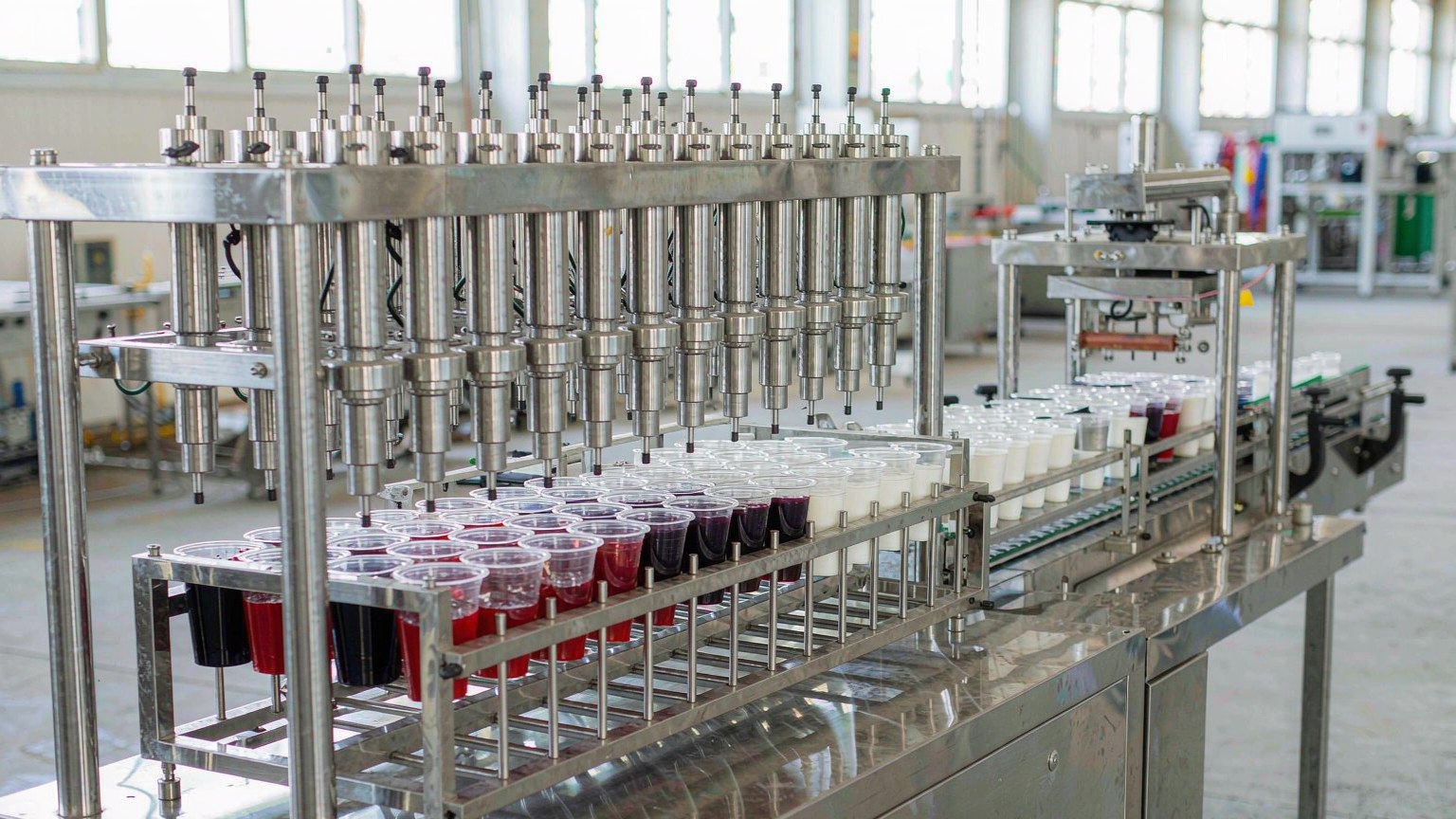
Cup and tray filling and sealing equipment sits close to consumer behaviour, so its direction of travel tells you something about what people are eating and drinking. On all three counts — how much packaging is needed, what kind, and how it is made — the equipment market is being pulled in the same direction.
Demand keeps broadening
The obvious driver is volume. New-style tea shops, chilled fresh milk, yogurt and prepared meals have all grown quickly, and every one of them ships in cups or trays. Whether the customer is a single-site drinks shop or a national dairy, the requirement converges on equipment that is fast, hygienic and consistent, because that is what holds both cost and seal quality under control. Beyond the established categories, ready-to-cook meal kits and pre-cut fruit are adopting cup and tray formats too, which extends the addressable market further.
Intelligence as the competitive edge
The machine itself is changing from a mechanism into an instrument. Sensors and connectivity allow running conditions to be monitored continuously, fill volume and sealing temperature to be regulated automatically, and faults to be flagged before they stop the line — including remotely. Downtime, which is the real cost of packaging equipment, falls as a result.
Flexibility, because variety is the new normal
Consumers want options, which means producers need to run more SKUs in smaller batches. That puts a premium on machines that change over quickly between cup shapes and film reels. Modular construction and automatic parameter adjustment are the enabling technologies; a machine that requires an hour of mechanical adjustment between products will simply not be used that way.
Lean production and the green agenda
High-accuracy dosing reduces product giveaway, and energy-efficient sealing reduces running cost — both of which are lean-manufacturing wins before they are environmental ones. Sustainability then adds a second layer, as packaging regulations push producers toward degradable and recyclable materials. The machines that win that transition will be the ones that handle new materials without sacrificing speed or seal integrity, and that do it with lower connected load.
Who builds them, and what that means for buyers
Domestic manufacturers have steadily improved in accuracy, stability and control capability while retaining advantages in cost and local service, and they now compete directly against imported equipment across much of the market. As the sector consolidates, buyers should expect more standardisation and stronger support — but also, usefully, a clearer choice between machines built for a price and machines built for a decade. Specifying for the second is usually the better decision.
Need help specifying or upgrading a line?
Send us your product, format and target output per shift. We come back with a station sequence, the tooling list and an indicative price — no obligation.
