

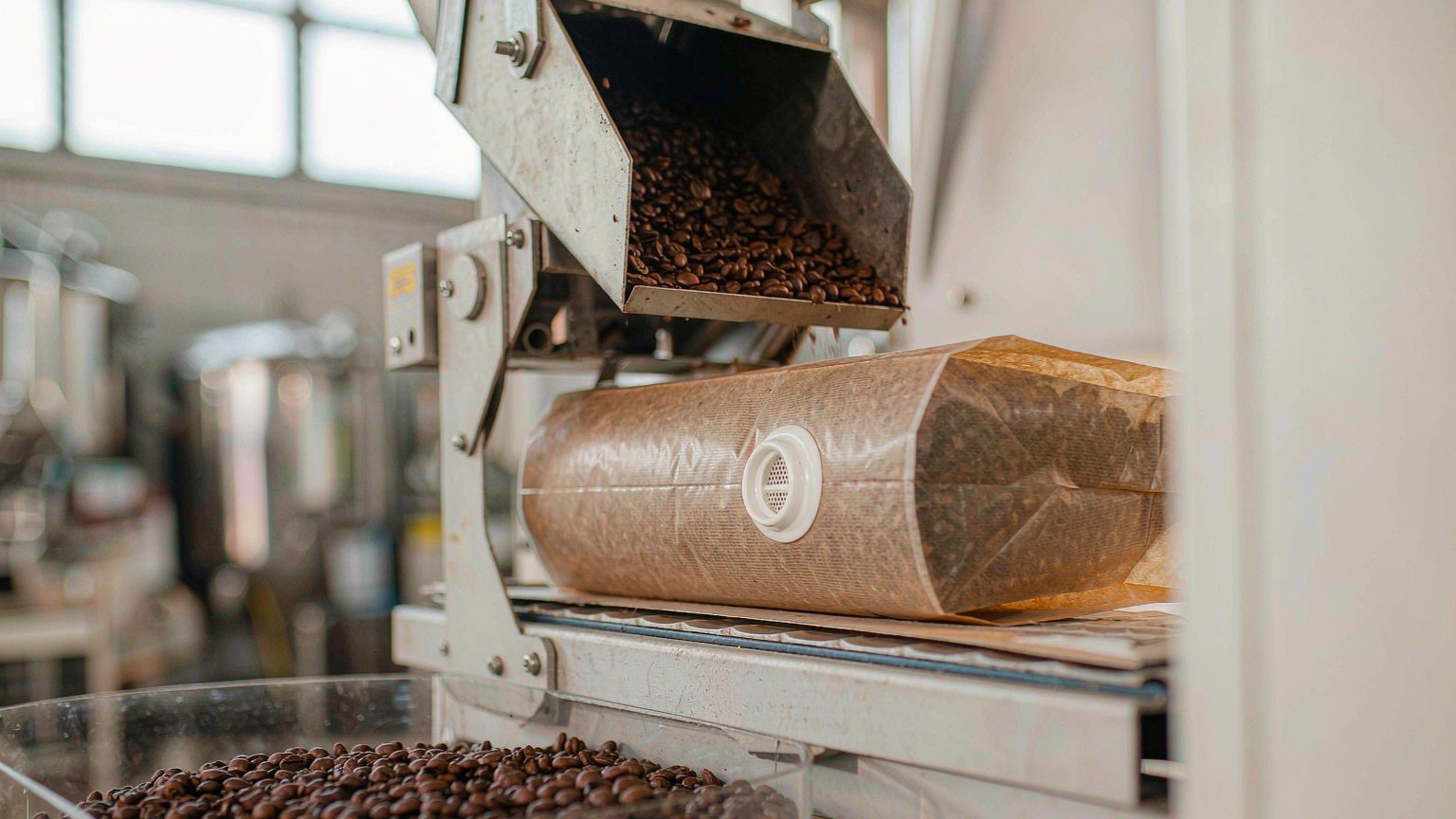
For a coffee roaster, the packing machine is the last point at which the product can be protected — or ruined. Ground coffee is hygroscopic, it carries oils that cling to surfaces, and its aroma compounds are volatile. Equipment that is set up and cleaned properly preserves all three; equipment that is not will stale perfectly good coffee before it reaches the customer.
Before start-up
Cleaning comes first. Every surface that will touch coffee — hopper, feed screw, former, sealing dies — must be free of residual powder and coffee oil from the previous run, because those residues both contaminate the next batch and impart stale flavours. Then check the machine itself: fasteners tight, pneumatic lines sound, electrical connections secure. With the machine confirmed sound, set parameters. Sealing temperature, pressure and dwell are chosen for the actual bag material and thickness — kraft paper, foil laminate, composite — because a temperature high enough for one structure will burn through another, and a temperature too low leaves an incomplete seal and a leaking pack. Then adjust fill speed and vibration for the grind in use: fine grinds bridge and dust, coarse grinds flow freely and fill differently, and the two need different settings to hit the same weight.
While it is running
Stay with the machine. Watch the sequence — dosing, bag forming, sealing and cutting — for any hesitation or misfeed. Listen for unusual noise and, though it sounds obvious, watch for the smell of scorching, which usually means sealing temperature has drifted or a heating element is failing. Keep the environment dry and the product free of lumps, because caked powder will not fill to weight. Reels should sit square with correct tension; misaligned film causes skewed seals and waste. And the safety rule is absolute: never put hands or tools into the machine while it is running. All adjustment and clearing happens with power and air isolated.
After the shift
Clean the machine inside and out immediately, removing powder and oil with food-grade cleaning agents. Then dry every part thoroughly before reassembly or storage, because residual moisture is what causes corrosion on a machine used daily. Follow the lubrication schedule for bearings and slides, and inspect and replace wear items — cutting blades, heating bars, seals — on a planned basis. A worn blade or a tired heating element is a cheap part that stops an expensive machine, and replacing it on schedule is always cheaper than replacing it after a failure.
Need help specifying or upgrading a line?
Send us your product, format and target output per shift. We come back with a station sequence, the tooling list and an indicative price — no obligation.
