

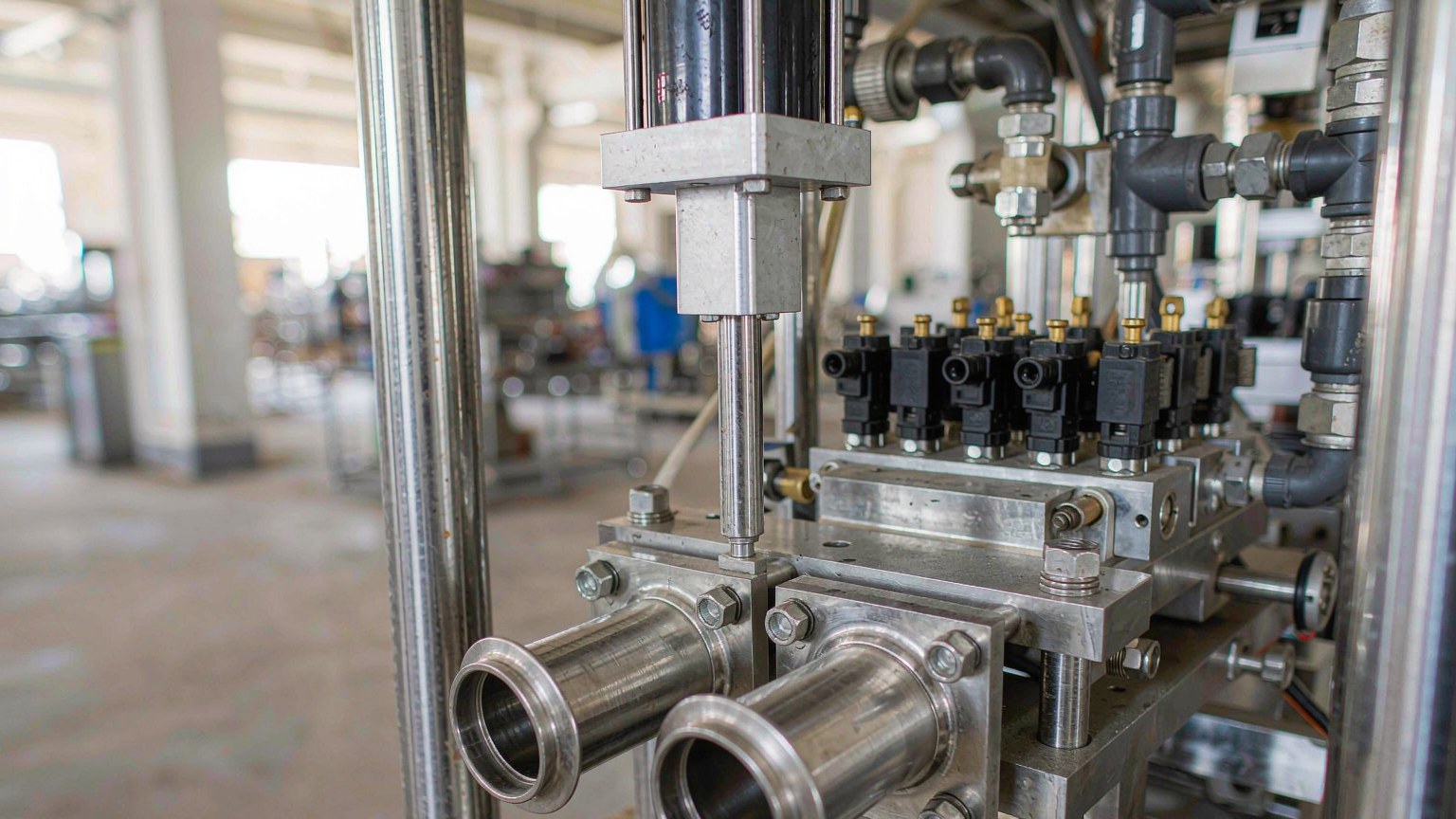
A liquid quantitative filling machine doses a defined quantity of liquid by setting fill volume and fill speed, and the sequence it runs — automatic supply, quantitative control, filling and discharge to sealing or conveying — is common to nearly every configuration. What varies is the method of measurement, and choosing it well is what determines whether the machine improves pack quality or merely makes it faster.
The measurement options
Electronic metering, piston pumps, gear pumps and magnetic pumps each suit a different combination of viscosity, chemical aggressiveness and accuracy requirement. Machines are also classified by the filling principle — atmospheric, vacuum or pressure — and by the process condition, supporting hot filling, cold filling and aseptic filling. That breadth is what allows the same equipment family to handle thin liquids, viscous liquids, foaming liquids and corrosive liquids, provided the specific machine is specified for the product in question.
Why accuracy is the central specification
Dosing accuracy, typically held within one percent, is what makes the machine valuable for products where it is demanded — pharmaceutical reagents, cosmetic serums, food products with expensive components. It has two effects. The first is pack quality: consistent fill volume means a consistent product, with no units that are visibly short and none that fail a declared-content check. The second is cost: material given away in over-filled units is a recurring loss, and on an expensive formulation it is a large one. Combined, those effects are why accuracy, not speed, is normally the specification worth paying for.
Automation and the labour equation
These machines use PLC control with a touchscreen interface, which allows multiple filling recipes to be stored and recalled with a single action. The practical result is that changeovers between products take seconds rather than a mechanical re-set, which reduces both the skill level needed to run the machine and the setup error that arises from manual adjustment. In labour terms, one operator supervises a machine rather than performing the filling, and the reduction in human contact with the product also reduces contamination risk — a benefit that matters in pharmaceutical and food production irrespective of cost.
Materials and format flexibility
Wetted parts are typically stainless steel to grades such as 304 or 316L, meeting good manufacturing practice and food safety standards, easy to clean and resistant to contamination — the reason the same equipment family appears in pharmaceutical and food plants alike. Format flexibility is delivered mechanically: filling heads, conveyor width and nozzle positions can be changed quickly to suit plastic bottles, glass bottles, tubes and bulk containers. It is the combination of accurate dosing, hygienic construction and fast format change that lets a single machine serve a product range rather than a single product.
Need help specifying or upgrading a line?
Send us your product, format and target output per shift. We come back with a station sequence, the tooling list and an indicative price — no obligation.
