

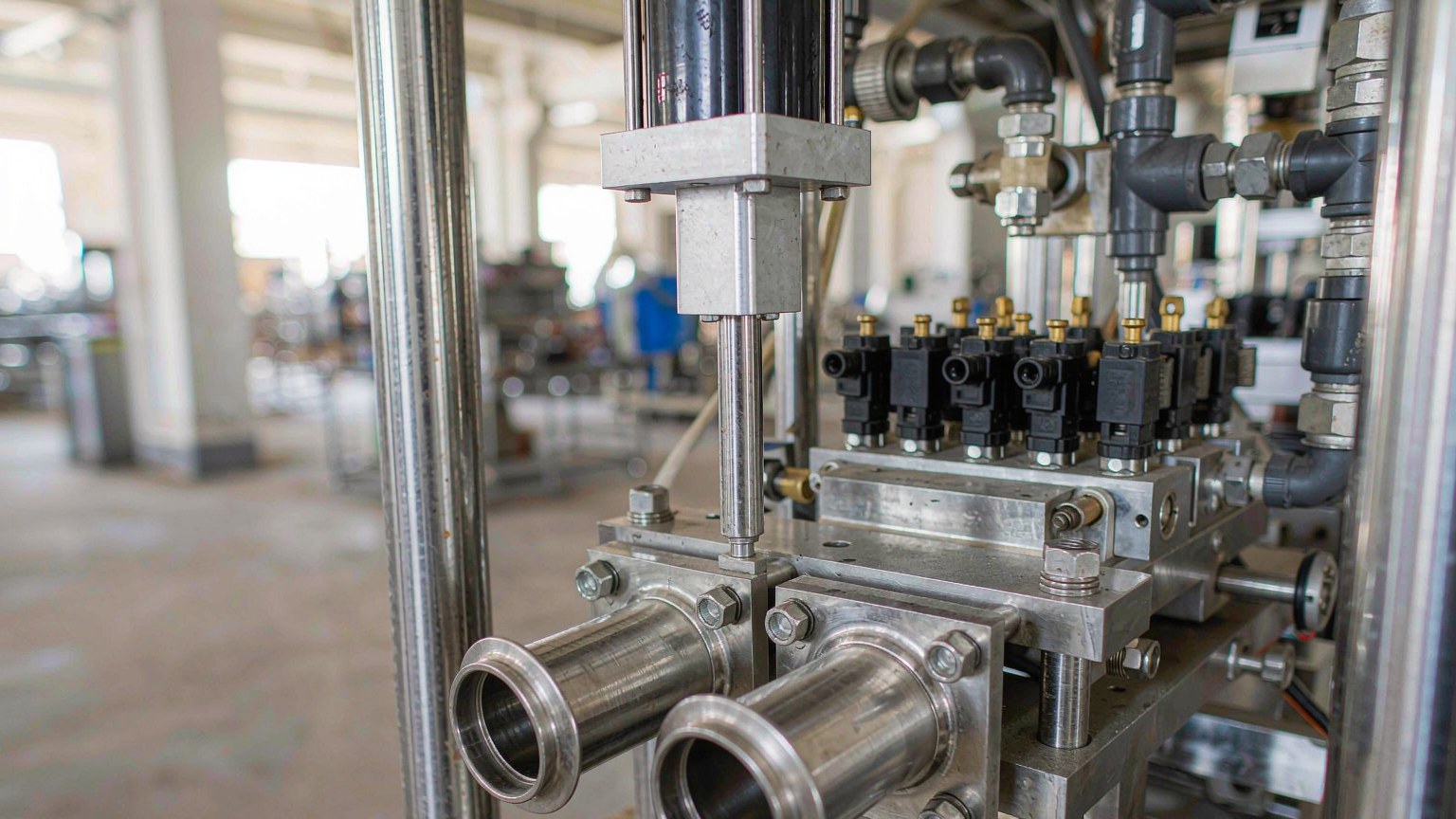
The filling and sealing machine is the heart of a packaging line: it puts a measured quantity of product into a container and immediately closes it, which is what makes the product safe and gives it a shelf life. Its mechanism combines mechanical, pneumatic and photoelectric control, and it is easier to understand as a sequence.
The sequence
In a rotary machine, containers are fed by the conveyor onto a star wheel, which positions each one precisely on a lifting platform. The platform rises under cam control and presses the container mouth against the filling valve, which is the point at which a seal is formed between the container and the machine. Filling then proceeds according to the product: at atmospheric pressure for still liquids, at equalised pressure for carbonated drinks where the pressure in the container must be maintained to prevent gas breakout, or under vacuum for products where removing air is beneficial. Once filling is complete, the container is carried to the closing station, where it is closed by capping, screw capping, press-on capping or roller seaming. The seaming case is worth understanding in detail: for a metal can end, first-operation and second-operation seaming rollers each form part of the joint in sequence, rolling the lid and the can body together into an interlocked seam. A correctly formed seam is what keeps a canned product sealed through transport and storage.
The main machine types
Machines divide by packaging format and degree of automation. Thermoform fill-seal machines start from a flat web of film, heating and forming cups, then filling, sealing and cutting them — the entire cup is produced and filled within one machine. Can filling and seaming machines serve liquid beverages, and high-speed canning lines reach extraordinary rates. Rotary and inline configurations each have their place: rotary machines are the choice where output is high and the container is consistent, while inline machines are simpler to adjust and better suited to lower volumes and variable formats.
Where the machines are going
The direction is toward higher speed, more intelligence and greater flexibility. PLC control with sensor feedback allows the filling process to be monitored and adjusted continuously rather than set and left, which is how machines maintain accuracy across a long production run. That combination — control, sensing and the mechanical precision of the filling valve and seaming head — is what actually determines whether a line’s output meets specification.
Need help specifying or upgrading a line?
Send us your product, format and target output per shift. We come back with a station sequence, the tooling list and an indicative price — no obligation.
