

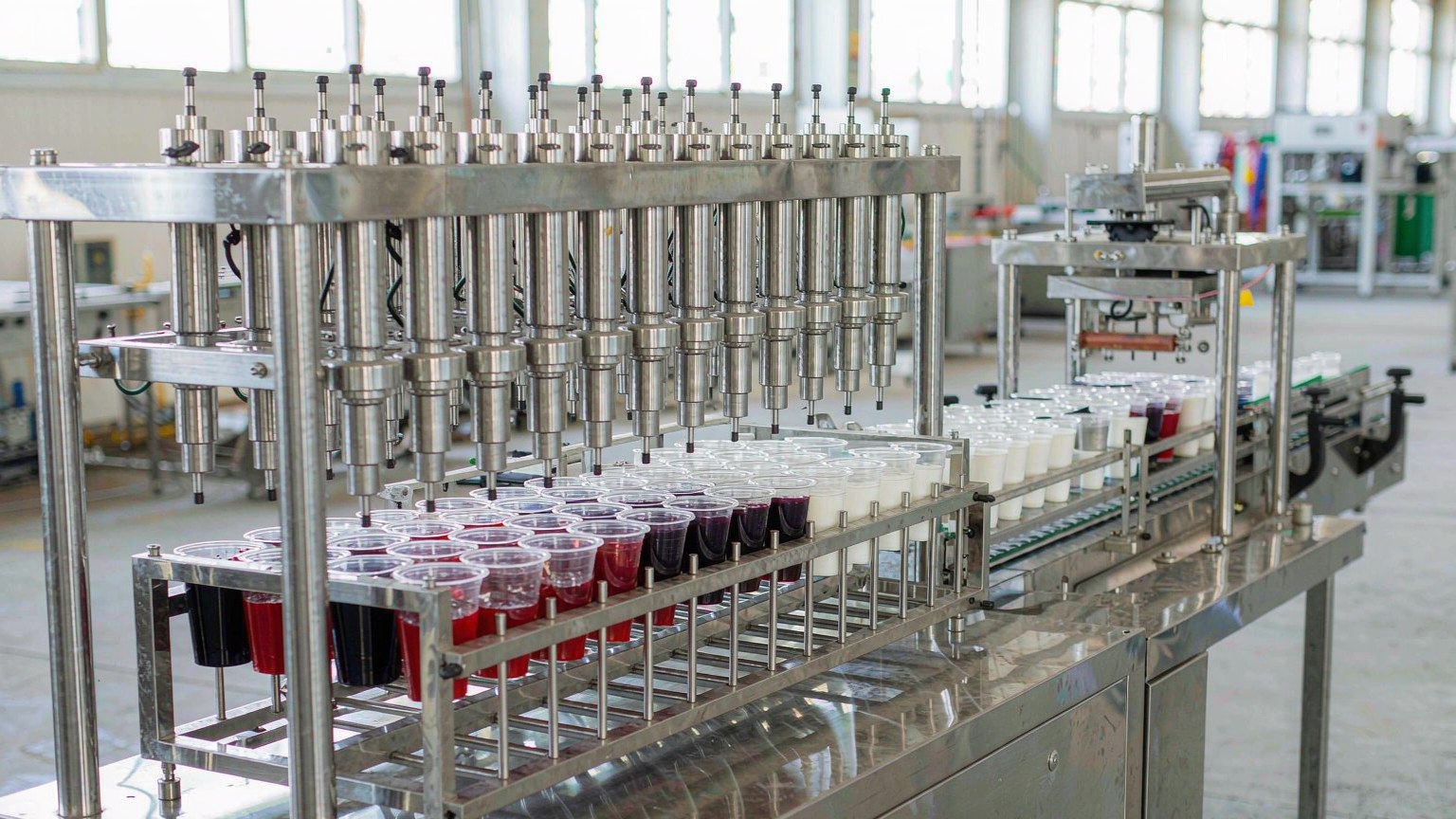
Ice cup filling and sealing equipment is a mature category, which makes its current direction of travel more interesting rather than less. Five trends are visible across the industry, and each one responds to a change in what producers and their customers want.
1. Deeper control and intelligence
Industrial-grade PLC control now coordinates material feed, filling and sealing with accurate timing, and collects process data while doing so. The significant change is what that data connects to: when the machine links to a manufacturing execution system, production can be scheduled, quality traced and equipment faults flagged before they stop the line. Alongside this, AI vision inspection is becoming more common — checking pack appearance, label position and foreign bodies in real time — which raises quality control from sampling to screening.
2. Sustainability as a design requirement
Environmental pressure is reaching the equipment specification rather than only the packaging material. Machines are being designed to run biodegradable and recyclable materials, and manufacturers are reducing energy consumption through more efficient motors and optimised process design. A machine that cannot handle the packaging a producer is being pushed toward becomes a liability regardless of how fast it is.
3. Customisation
Different customers want different things from the same product category — different fill behaviour, different cup geometries, different sealing requirements. Rather than selling one standard machine, manufacturers increasingly develop configurations around a specific product’s characteristics, which shifts the sales conversation from a catalogue to a specification exercise.
4. Sealing and filling optimisation
On the sealing side, a wider range of techniques is being deployed — impulse heat sealing, constant-pressure cold sealing and others — each matched to the thermal and mechanical behaviour of the specific packaging material. The parameters of temperature, pressure and time are adjusted continuously by the control system rather than set once. On the filling side, the design is grounded in fluid behaviour plus modern sensing, so that ice cubes and ice balls are dosed by monitoring flow rate and pressure in real time and closing the loop, holding fill error inside a very narrow band.
5. Machines that are easier to live with
The final trend is ergonomic. Interfaces are being simplified so that a new operator becomes competent quickly. Structurally, modular design matters more than it sounds: fast replacement of key components reduces mean time to repair, which raises availability. On a line that runs every day, that reduction in repair time is worth more to the business than a small gain in rated speed.
Need help specifying or upgrading a line?
Send us your product, format and target output per shift. We come back with a station sequence, the tooling list and an indicative price — no obligation.
