

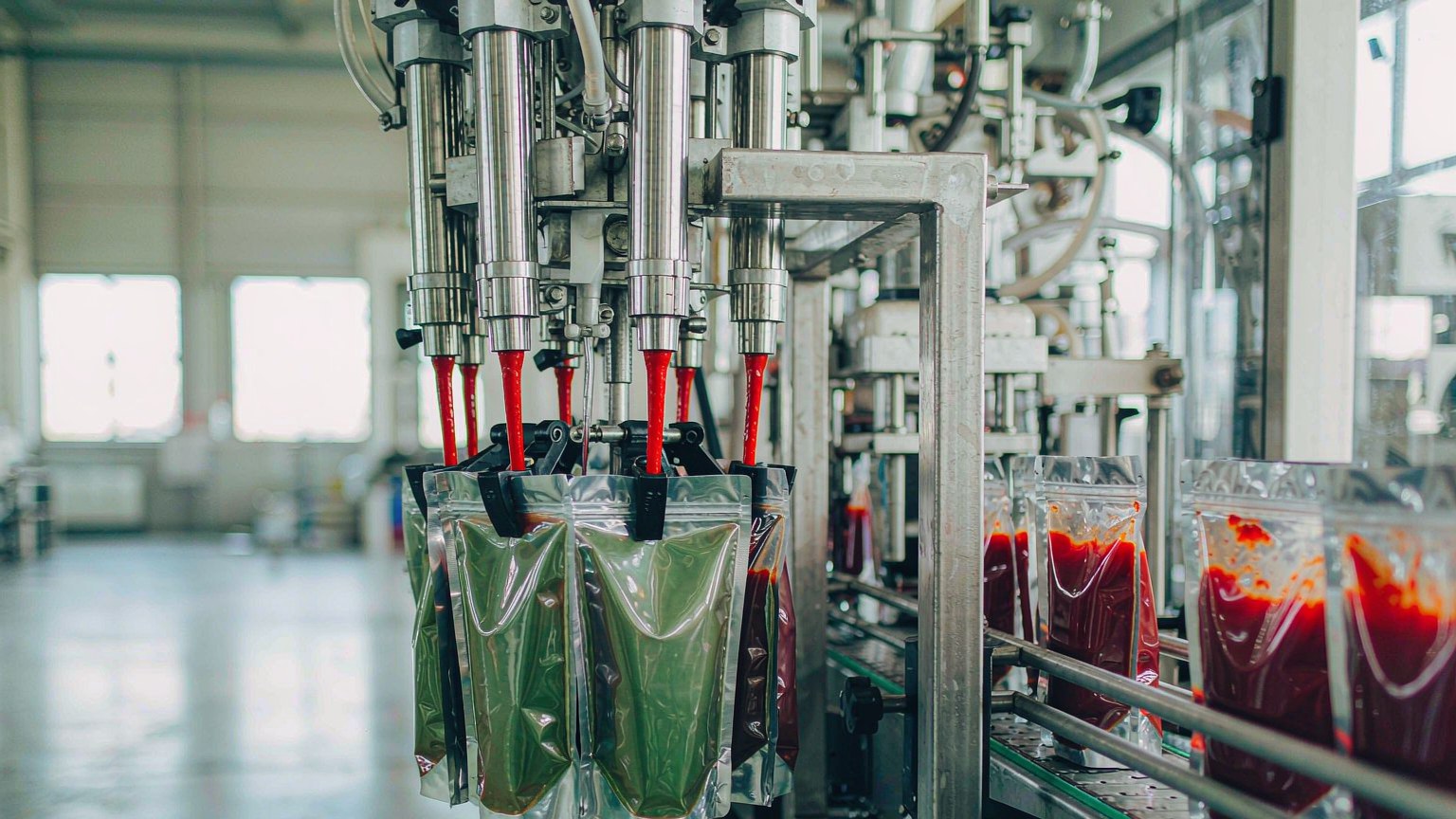
Flexible packaging reaches the market in two forms: roll stock and finished bags. Since almost all roll stock eventually becomes a bag — with the exception of stretch and twist films that take the shape of their contents — the pouch is where the material’s potential is realised, and it is where the interesting design work happens.
Six directions in pouch design
Function first. A pouch has to deliver what the contents require: seal integrity, barrier performance, mechanical strength, and resistance to retort or freezing conditions as appropriate. This is where new materials do their most valuable work. Novelty is the second direction — pouch shape, print design and accessories such as loops, hooks and zippers all raise a product’s presence on the shelf. Convenience is the third: the format should accommodate as wide a range of products as possible. A stand-up pouch handles liquid, solid, semi-solid and even gaseous contents, while an eight-side-seal pouch suits dry solids from food to seeds. Consolidation of benefits is the fourth — a shaped stand-up pouch with an angled spout and a tube combines several formats’ advantages in one pack. Cost and environmental performance form the fifth, since resource efficiency is a principle every packaging material is now judged against. And the sixth is the influence of new materials themselves: a stretch film that hugs a sausage or a piece of dried tofu produces a package that is technically not a pouch at all.
Five ways to extend a pouch
The first is a welded spout. Adding a spout to almost any pouch gives it the open-and-close behaviour of a bottle, and varying the spout and cap shape generates a whole family of designs from one base format. The second is valves and taps: a one-way degassing valve lets gas escape while blocking ingress, which suits products that continue to release gas, and a plastic tap turns a pouch into a controlled-dispense container with the function of a drum. The third is a supporting insert — a folded carton placed inside the pouch and heat-sealed in position, the bag-in-box concept, which combines the strength of board with the flexibility of film. The fourth is authentication features, whether a laser hologram applied to the surface or a security label laminated between film layers. The fifth is easy-open design: tear lines, tear notches and serrated edges, which are now commonly produced inline as part of the pouch-making process rather than added afterwards.
Why this matters to a buyer
The direction of travel is toward pouches that carry more function in the same material footprint. For a producer, that means the pouch specification is a genuine design decision — not a commodity purchase — and the conversion equipment has to be capable of running it.
Need help specifying or upgrading a line?
Send us your product, format and target output per shift. We come back with a station sequence, the tooling list and an indicative price — no obligation.
