

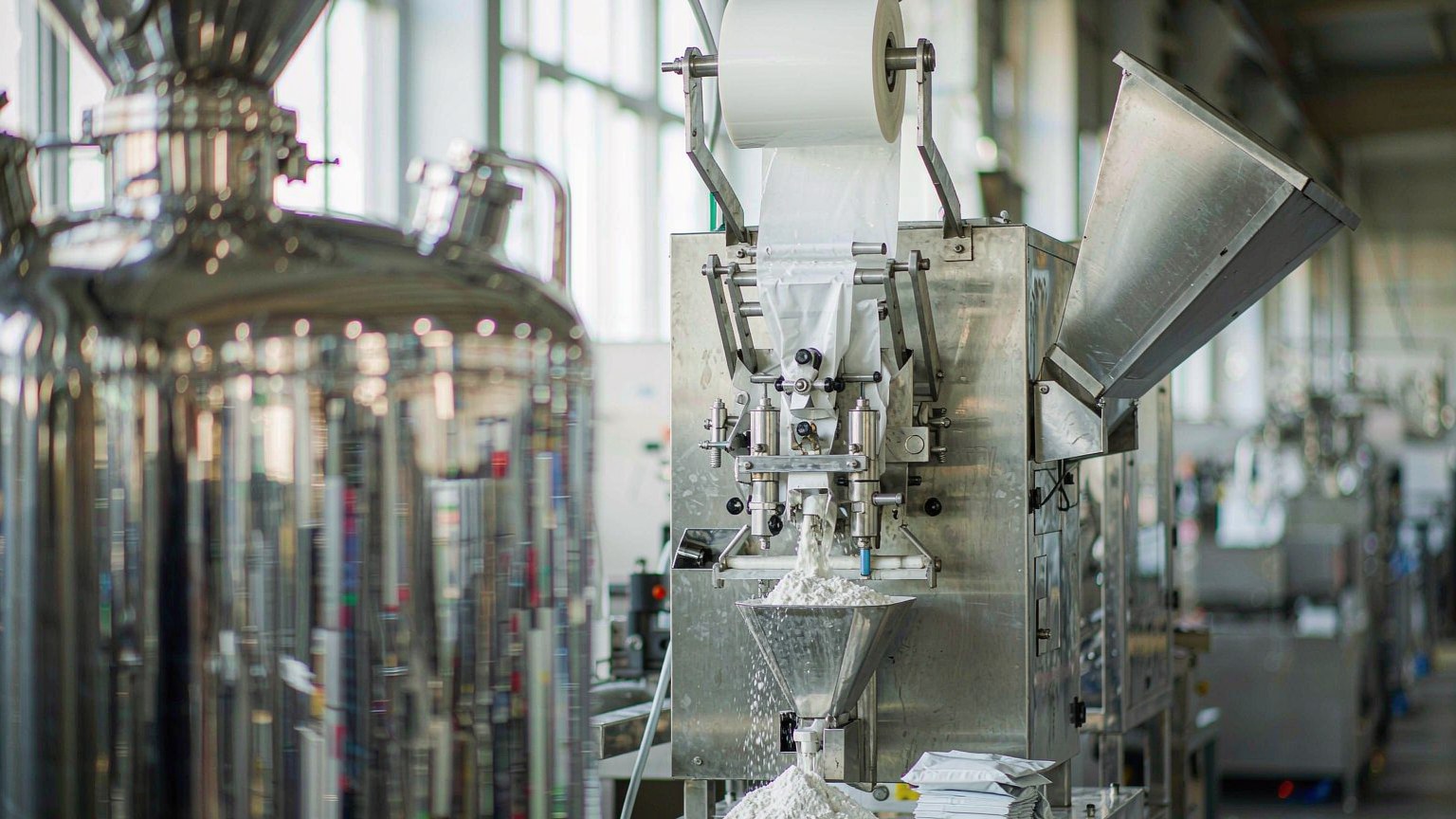
The growth of coffee consumption has changed coffee powder filling and sealing equipment more in a decade than the preceding decades did. The change is easy to summarise: machines moved from doing the job to doing it intelligently, and from one fixed product to many.
From usable to intelligent
Early machines met a basic functional requirement with limited precision. The current generation treats accuracy as a baseline: servo control and high-precision screw metering are standard, holding bag weight within a very narrow tolerance — a requirement that follows directly from the standards of speciality coffee. Nitrogen flushing has moved from an option to an expectation on mid- and upper-range machines: the system evacuates the bag and replaces the air with an inert gas before sealing, which extends both shelf life and the retention of volatile aroma. The third shift is connectivity. Machines report through the PLC and industrial protocols so that output, energy use and fault history can be monitored remotely, and predictive maintenance can be scheduled rather than improvised — which shows up as reduced unplanned downtime and better overall equipment effectiveness.
Two markets, two machine types
Coffee consumption has grown in both the ground and instant segments, and they pull equipment in opposite directions. Large food manufacturers need high-speed, stable automated lines, pushing machines toward higher throughput. New and small roasters and speciality workshops need flexibility, which pushes toward machines that can change over quickly. Modular design reconciles the two: interchangeable screws and packaging film handling let a single machine produce different bag weights and different formats — drip bags, capsules, stick packs — without a rebuild. That flexibility is what allows a small producer to iterate on products quickly, which is the competitive advantage they actually rely on.
Competition and direction
Competition in this equipment category has moved past price. It now turns on technology, service and the ability to deliver a complete solution, and manufacturers that invest in core development while responding quickly to service requests have gained share against imported machines. The next phase looks like integration — filling, sealing, cartoning and palletising supplied as one line — together with sustainability requirements built into the design, including compatibility with degradable and recyclable packaging and lower energy consumption per pack.
For a roaster or a food manufacturer, the practical implication is that a filling machine should now be bought as production infrastructure rather than as a machine: what matters is the flexibility it gives, the data it produces and the uptime it sustains.
Need help specifying or upgrading a line?
Send us your product, format and target output per shift. We come back with a station sequence, the tooling list and an indicative price — no obligation.
