

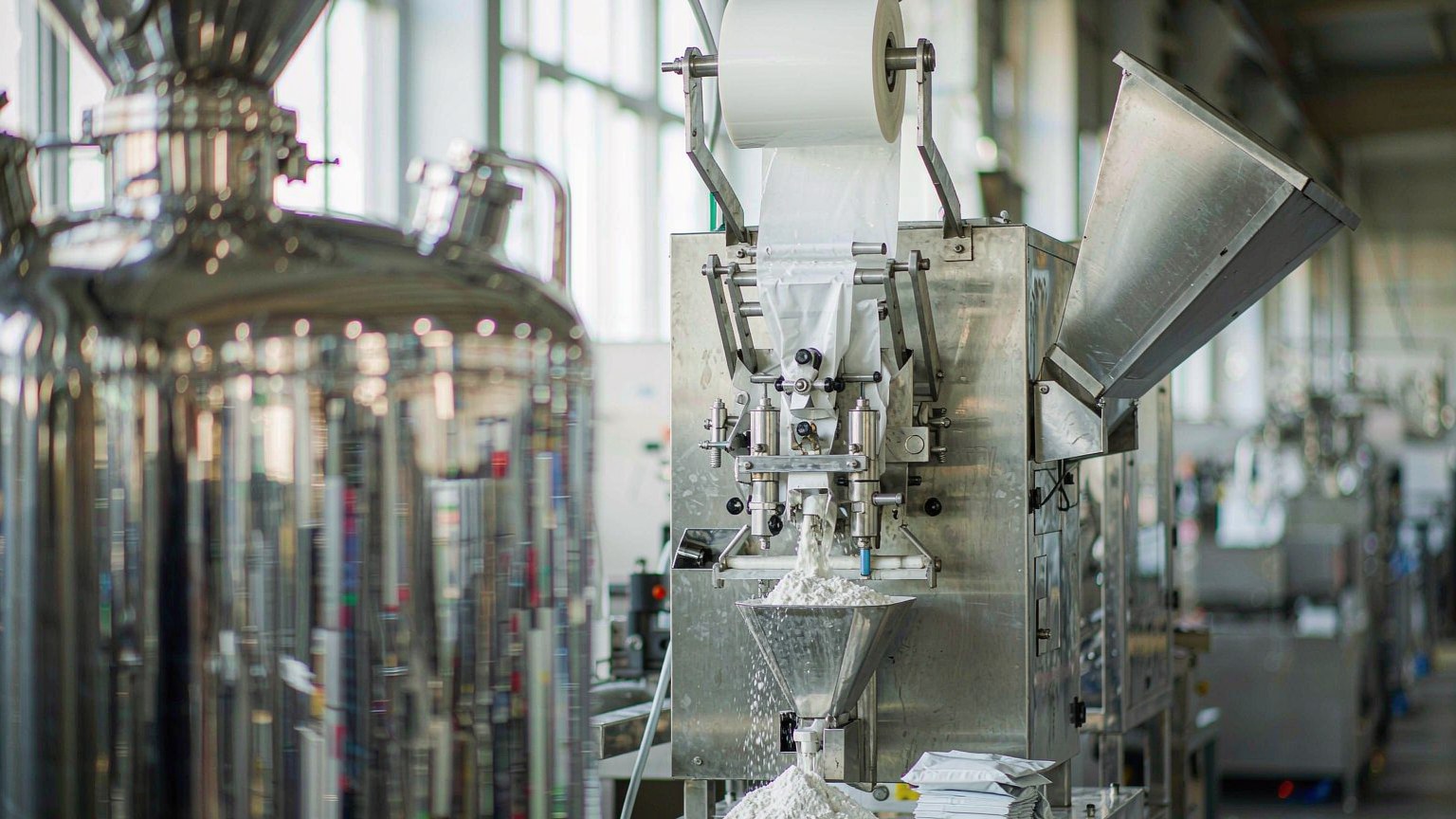
Coffee is one of the more aggressive products a packaging line handles. Its oils, fines and added ingredients such as sugar adhere to surfaces, oxidise into stubborn deposits, support microbial growth and, over time, corrode the equipment they sit on. Cleaning a coffee filling and sealing machine is therefore not routine housekeeping — it is a direct determinant of flavour, shelf life and brand reputation.
Daily cleaning: the non-negotiable baseline
Cleaning happens at the end of every production day, after isolating the machine, and its purpose is to remove everything the shift deposited. Strip all removable components that contact product — hopper, filling valves, conveyor guides, sealing dies — and wash them thoroughly with a food-grade neutral cleaning agent and warm water, avoiding excessive heat that could distort precision parts. For areas that cannot be dismantled, such as the interior of filling valves and pipe connections, use dedicated brushes and cloths to clean methodically. Then sanitise: all cleaned surfaces, and especially those that contact product, should be treated with an approved sanitiser and rinsed with purified water so that no chemical residue remains.
The sealing head deserves particular attention
The heat sealing assembly is where cleanliness has the most direct effect on output quality. Once the sealing die — copper or ceramic — has cooled to a safe handling temperature, remove carbonised coffee oil and residue from its surface with a soft cloth or brass brush. Any deposit left on the die transfers to subsequent seals and compromises both the airtightness and the appearance of the pack. This is the single cleaning task most often performed inadequately, and it is the one with the clearest consequences.
Scheduled maintenance
Periodic maintenance prevents the faults that daily cleaning cannot. Weekly or monthly, lubricate or replace the grease in the drive system — guide rails, bearings, lead screws — with the specified product, check the pneumatic filter and drain condensate so that the air supply stays dry and clean, and examine all seals and O-rings for ageing, wear or deformation, replacing them immediately rather than at the next scheduled stop. Once a year, or after a defined number of running hours, have a qualified engineer perform a full overhaul: calibrate the servo accuracy, inspect wiring for deterioration, and check the machine’s mechanical alignment and level, which is what protects long-term stability and filling precision.
Records and culture
Keep a cleaning and maintenance record for each machine, noting what was done, when and by whom. Its immediate value is traceability when a quality problem appears; its longer-term value is behavioural. A record that is actually completed encourages the habit of doing the work, and it is how a plant moves from cleaning when someone remembers to cleaning as a defined procedure.
Need help specifying or upgrading a line?
Send us your product, format and target output per shift. We come back with a station sequence, the tooling list and an indicative price — no obligation.
