

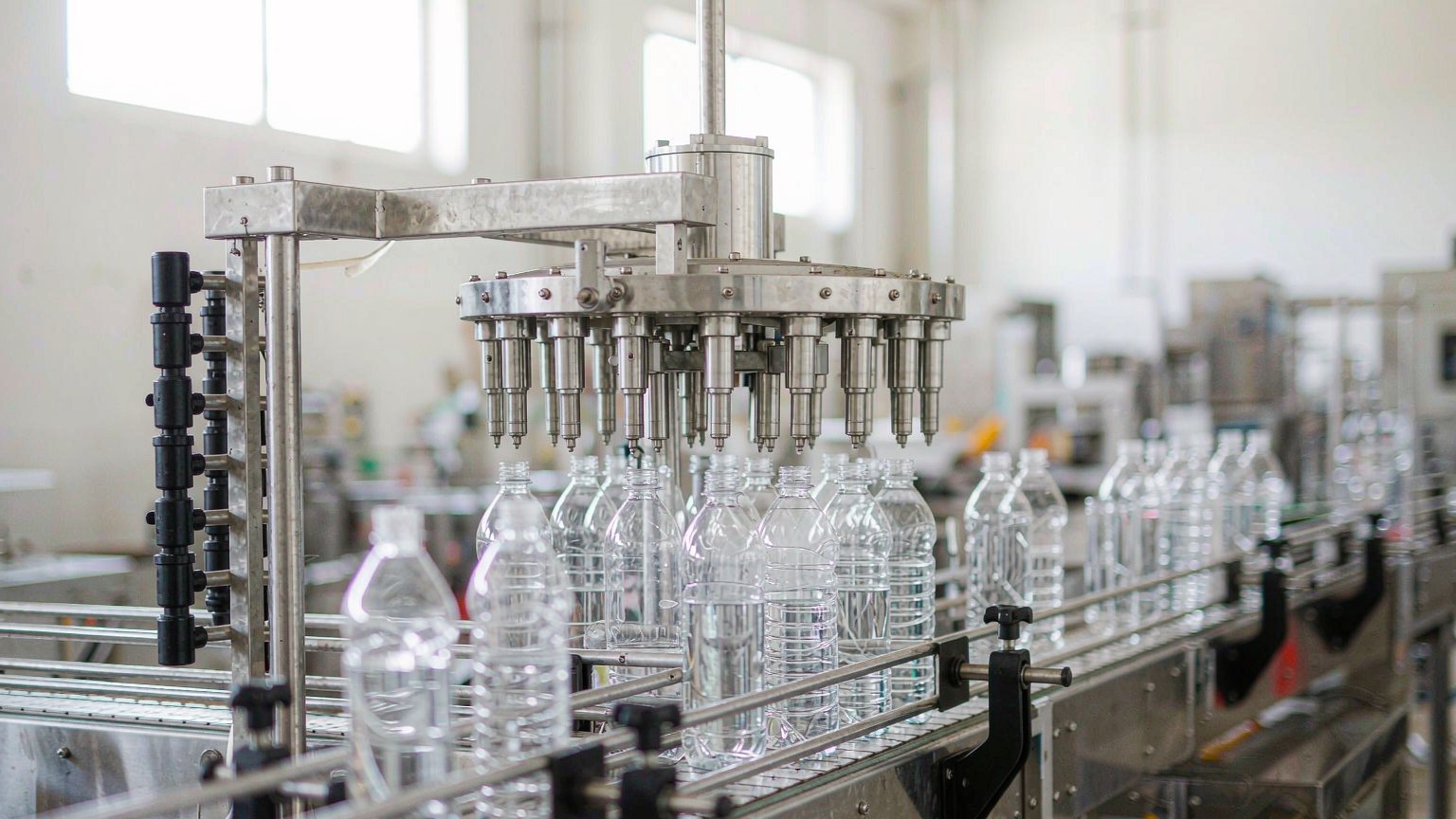
Juice is a demanding product to pack. It is nutritious enough to support microbial growth, sensitive enough that heat and oxygen degrade its flavour and colour, and expected by consumers to taste fresh. A modern juice filling and sealing line resolves that tension through aseptic filling, in which the product and the packaging are sterilised separately and then combined in a sterile environment.
The sequence, step by step
It begins with the empty container. Cartons, plastic bottles or glass bottles pass through a sterilisation stage — ultraviolet light, hydrogen peroxide or steam — before being conveyed into the filling zone, so that the container is sterile at the moment it meets the product. That is the foundation of a long shelf life without refrigeration.
Filling then takes place in a sealed chamber held at positive pressure and a high cleanliness class, so that the environment cannot contaminate the product. Juice that has been pasteurised or treated at ultra-high temperature is dosed by a high-accuracy flow meter or a timed volumetric pump. The stability of the fill volume is not merely a cost matter; it is also a matter of regulatory fairness and product consistency, and it is the parameter most worth verifying on a new line.
Sealing follows immediately. For a paper-aluminium composite carton, the machine folds and heat-seals the packaging material; for a plastic bottle, it places and tightens the cap. The requirement is speed and continuity — the interval between the product leaving the filler and being sealed must be as short as possible, because that interval is the only window in which recontamination or flavour loss can occur. Coding is then applied by laser or inkjet, marking the production date and batch, and the finished pack is discharged to case packing.
Why aseptic filling matters
The value of the whole arrangement lies in what it permits. By maintaining a sterile chain from container sterilisation through to the finished seal, the process delivers a shelf life measured in months while using little or no preservative, and it preserves the original flavour, colour and nutritional content that heat treatment alone would compromise. That combination — long life plus fresh character — is what the juice market and adjacent categories, from tea to plant-based drinks, have been built on.
What it represents
A juice filling and sealing machine is therefore not simply packaging equipment. It is where mechanical engineering, microbiology and food science meet, and its capability sets the boundaries of what a beverage producer can make and how far the product can be distributed. For a producer specifying a line, the parameters worth insisting on are the sterility of the filling zone, the accuracy and stability of dosing, and the speed of the sealing operation — because those three determine the product’s shelf life, cost and reputation.
Need help specifying or upgrading a line?
Send us your product, format and target output per shift. We come back with a station sequence, the tooling list and an indicative price — no obligation.
