

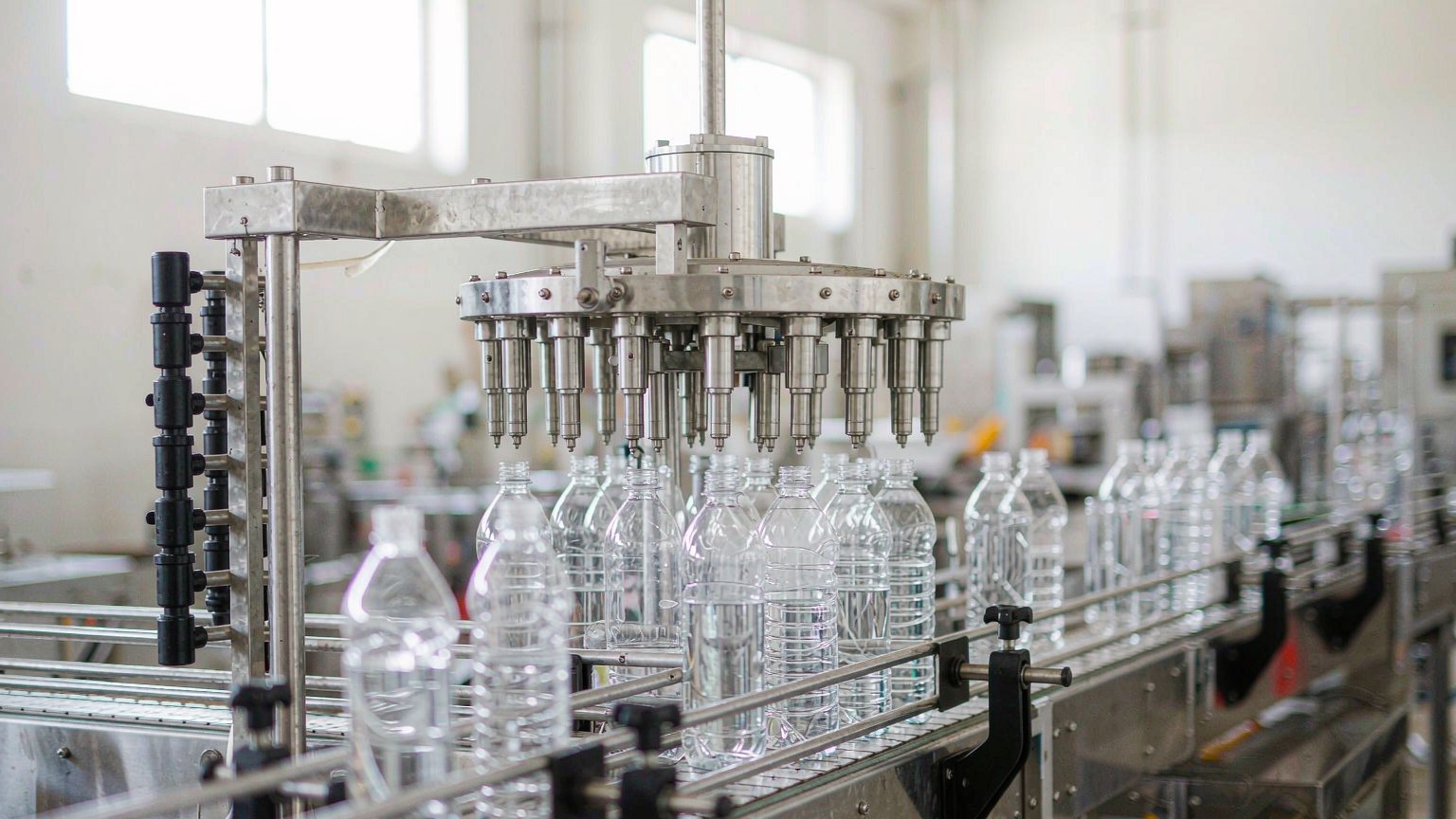
Juice is one of the least forgiving products to run through a filling line. It carries sugar that feeds microbes, it spoils quickly, and it leaves sticky residue that hardens onto machine surfaces. Combine that with a machine containing heated sealing jaws and moving conveyors and the operating discipline around the equipment matters as much as the equipment itself.
Before start-up
Begin with the routine checks that prevent most incidents. Confirm power and, on pneumatic machines, air supply are stable and within specification. Inspect drive components and lubrication points and top them up as the manual requires. Make sure the conveyor path is clear and that no fastener has worked loose from the previous run. Then clean and sanitise everything the product will touch — hopper, filling valves, product lines and sealing head. For a sugar-rich product this step is not housekeeping; it is the primary control against microbial growth.
Calibrate before you produce
Set fill volume, sealing temperature, dwell time and pressure to suit the container and the product, then verify with a small trial run on empty containers before releasing the line. Confirm fill accuracy and seal integrity on the trial pieces. Discovering at the end of a shift that the sealing temperature was wrong is an expensive way to learn it.
While the line is running
Watch and listen. A change in sound or vibration usually signals a developing mechanical problem. Check that fills are even and drip-free, and that seals are flat, complete and free of scorching or weak spots. Clean up spills as they happen — dried juice builds a film that attracts contamination and stiffens moving parts. If the machine jams or a fill is wrong, stop it with the emergency stop and clear the fault with the machine isolated. Reaching into a running machine is the single most common cause of serious injury on packaging lines.
At the end of production
Clean immediately, not at the end of the week. Flush the filling system and product lines with water and a suitable cleaning agent to remove all residue, then sanitise and allow to dry. Follow the manufacturer’s schedule for inspecting and replacing wear items — seals, heating elements, film cutters — because those are the parts whose failure stops a line without warning. Finish by isolating the power supply and leaving the machine and its surroundings dry and tidy.
None of this is complicated. It is simply a routine that has to be followed every shift, which is precisely why it is worth writing down and signing off.
Need help specifying or upgrading a line?
Send us your product, format and target output per shift. We come back with a station sequence, the tooling list and an indicative price — no obligation.
