

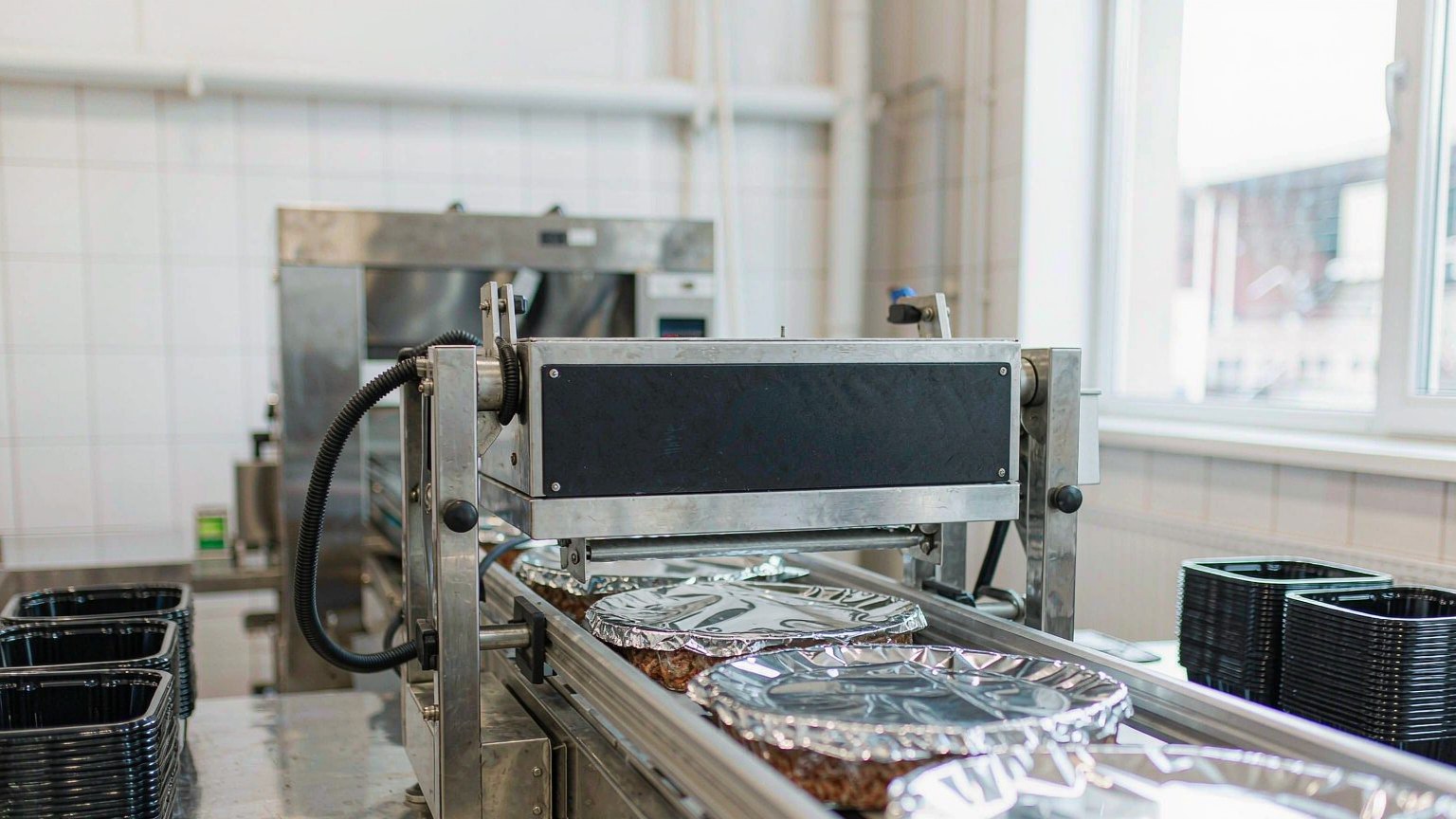
Every manufacturing process upstream of the packing hall is ultimately judged by the pack that reaches the customer. If the fill is wrong, the product is short. If the seal fails, everything the process did to keep the product safe is undone in transit. Filling and sealing machines sit at that point of no return, and they serve an extraordinarily wide range of industries — dairy, beverages, pharmaceuticals, household chemicals.
Two operations, both demanding
Filling is a metering problem. The machine must deliver a defined volume or mass of liquid, paste or powder into a container, using a volumetric pump, a flow meter or a load cell. The target is accuracy at speed: modern machines hold fill volumes to millilitre resolution, which cuts product giveaway and keeps units consistent across a batch and across shifts. Sealing is a closure problem, and its solution depends on the container and the product. Heat sealing fuses plastic films and laminates — the technology behind most pouches and bagged liquids. Screw capping applies a threaded closure to bottles and dominates beverages and condiments. Press-on capping crimps a crown or lug closure onto a glass or can neck, which is how beer and carbonated soft drinks are closed. Induction sealing and stopper systems, common in pharmaceuticals and premium drinks, apply a foil membrane to the container rim so the pack has both a physical stopper and a hermetic membrane.
Where the equipment is heading
Four directions stand out. Automation now extends beyond the filler itself: container handling, aseptic filling, sealing, labelling and palletising can run as one coordinated line with few or no operators in the product zone, which reduces both labour cost and contamination risk. Control systems have become genuinely intelligent, combining PLC logic with a touchscreen interface, self-diagnosis and production reporting so the machine contributes data rather than only output. Flexibility has become a design requirement rather than an afterthought — modular machines with quick-change filling heads and sealing tooling can run multiple formats on one frame, which is the only economical answer to small-batch, multi-variant demand. And sustainability is now part of the specification, through lower energy consumption, less packaging waste and compatibility with recyclable and degradable materials.
Seen from the warehouse, the filling and sealing machine is the final step. Seen from the customer’s kitchen, it is the step that determines whether the product is any good at all.
Need help specifying or upgrading a line?
Send us your product, format and target output per shift. We come back with a station sequence, the tooling list and an indicative price — no obligation.
