

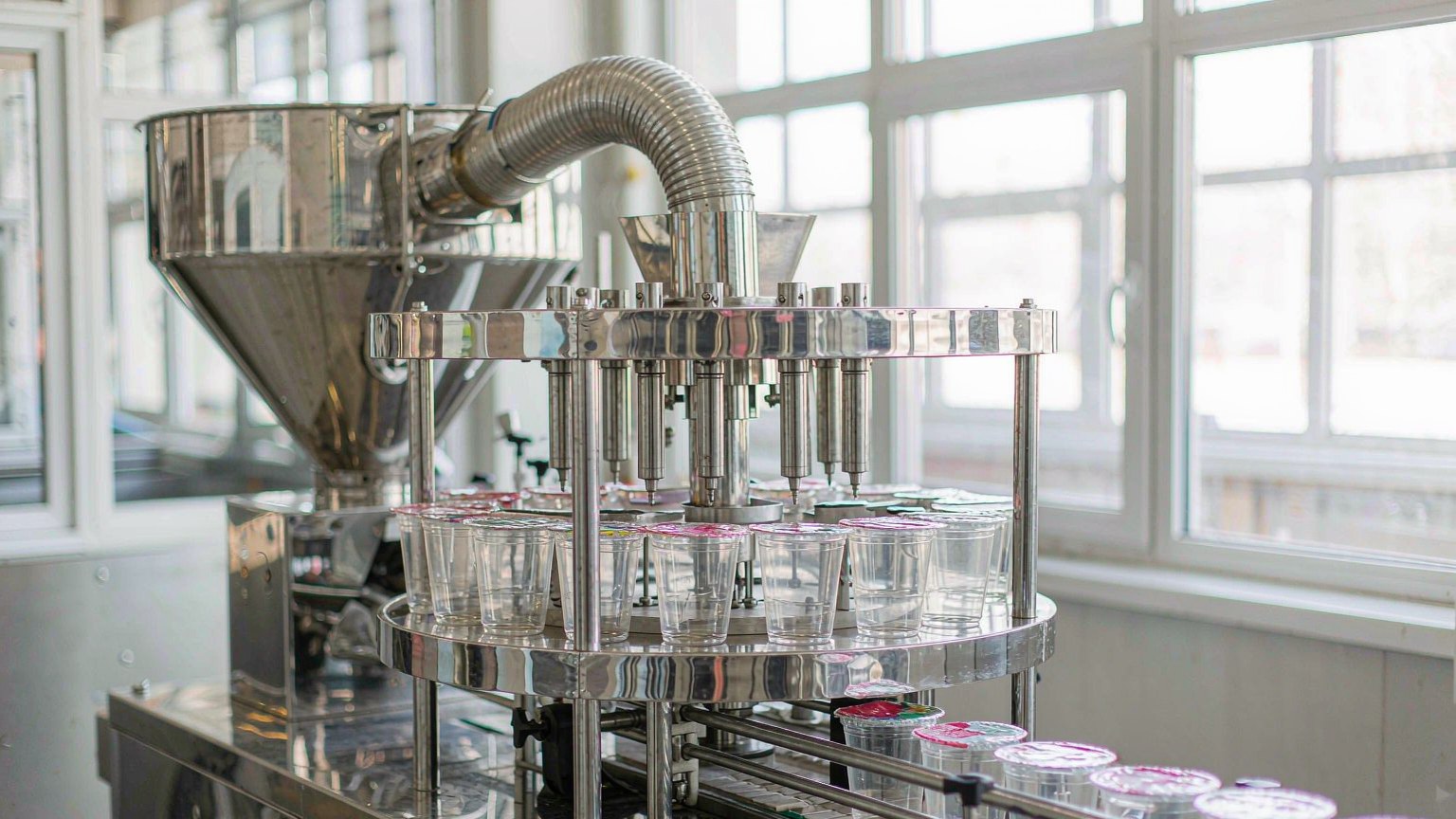
Walk into any convenience store and half the chiller is cup and tray packaging: yogurt, jelly, dessert pots, chilled desserts, prepared salads. Behind each one sits a cup and tray filling and sealing machine, an unglamorous category of equipment whose technical progress shapes what the food industry can sell.
What is pushing the change
Consumer demand is the main driver, and it is pulling in two directions at once. Volume keeps rising as prepared and single-serve food becomes routine rather than occasional. At the same time, variety is exploding — new flavours, seasonal products, layered formats with fruit, cereal or sauce inclusions, and a shift from round plastic cups toward shaped trays and recyclable or compostable materials. A machine that only runs one format at one speed quickly becomes an obstacle.
Intelligence and control
PLC control with a touchscreen interface is now standard, and it has changed what operators do. Parameters are set once and stored as recipes, output is monitored in real time, and faults are diagnosed by the machine rather than hunted by a technician. Linking the machine to a manufacturing execution system adds traceability: which product, which batch, which settings, at what time.
Flexibility through precision
Servo-driven dosing is increasingly common because products such as fruit-on-the-bottom yogurt demand both an accurate base fill and an accurate inclusion. Modular design delivers the other half of flexibility — interchangeable moulds and filling heads let the same machine run a different cup shape or volume after a short changeover, which is what makes short production runs economically sensible.
Hygiene, raised to a standard
Food safety requirements have moved mid-range equipment upward. Stainless steel construction to 304 grade or better, contact parts that can be removed by hand for cleaning, and integrated cleaning-in-place and sterilisation-in-place circuits are now expected on machines serving dairy and prepared foods. The objective is to remove the human contact points where contamination enters.
Where the market sits, and what comes next
The supply side is layered: a large base of small builders competing mainly on price, a strong middle tier offering good value with credible support, and a small top tier handling ultra-high-speed or highly specialised applications. The middle tier is where most buyers will find their machine, and it is also where the gap to the top tier is closing fastest. Looking ahead, the direction is clear: fuller line integration with tray forming upstream and cartoning or palletising downstream, packaging that works with recyclable and degradable materials, and hygiene standards that leave no assumptions to the operator. The cup may be small; the engineering behind it is not.
Need help specifying or upgrading a line?
Send us your product, format and target output per shift. We come back with a station sequence, the tooling list and an indicative price — no obligation.
