

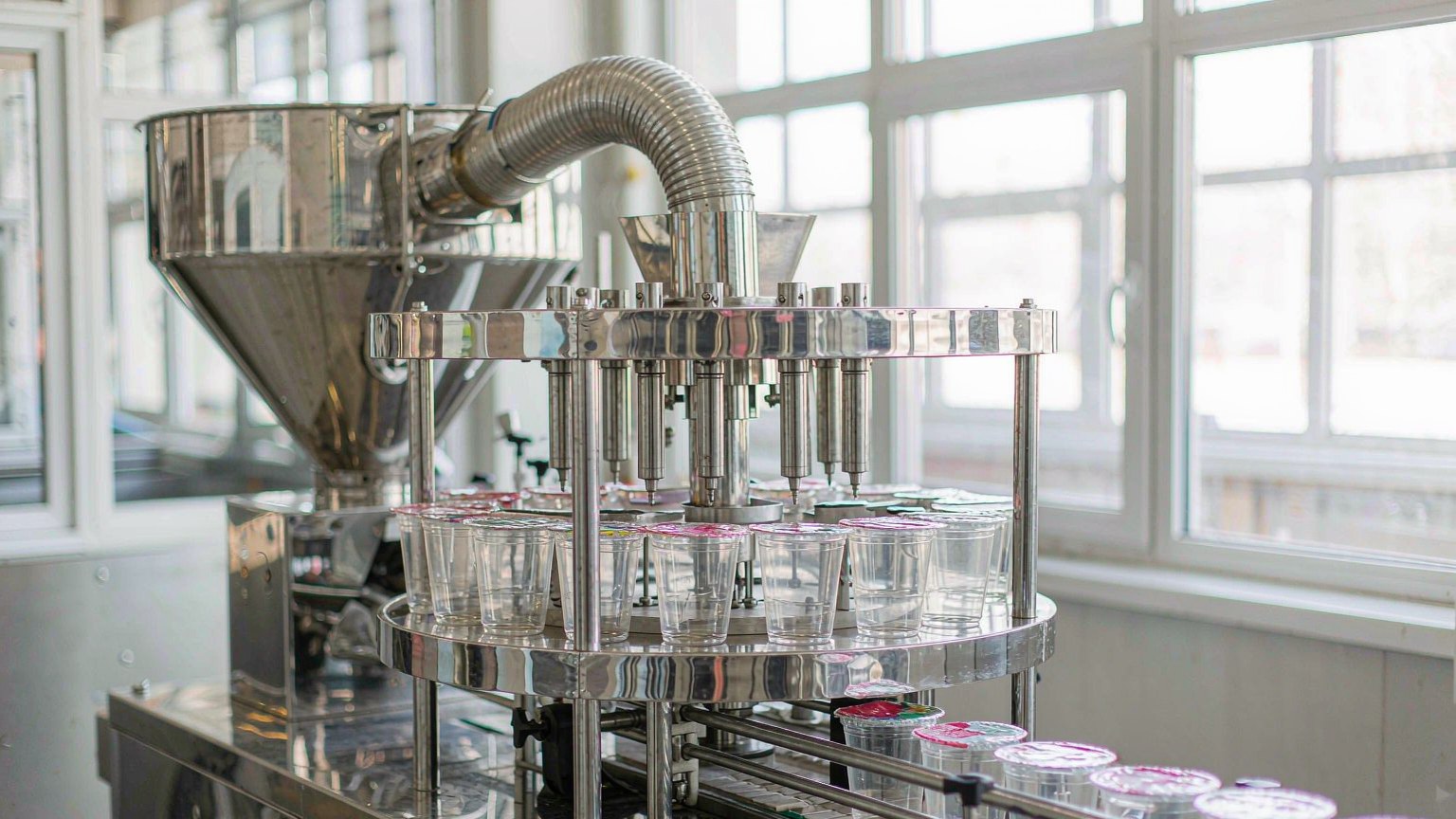
Maintaining an ice cube filling and sealing machine is not one task but three, and they sit at different levels: hygiene, which is daily; mechanical stability, which is scheduled; and heat-seal calibration, which is precise work that determines whether the pack holds at all. Treating them separately is what makes the maintenance system work.
Priority one: hygiene, every day
The machine touches food, so hygiene failures are product-safety failures, not housekeeping issues. After every production day, clean and sanitise every part that contacts ice or packaging. The hopper and feed arrangement need residual ice fragments and water removed, because both support bacterial growth and cause ice to fuse into blocks. The former and filling chutes should be wiped with a food-grade sanitiser to prevent carryover between batches. And the sealing dies — the tooling that closes the pack — deserve particular care, because plastic film fragments and residue collect there and, left in place, they degrade both the quality and the appearance of the seal.
Priority two: mechanical stability, on schedule
Continuous production depends on the drive train, so maintain it to the manual’s intervals rather than to failure. Lubricate bearings, guide rails, gears and cams with the specified lubricant, because running dry raises resistance and eventually causes an unplanned stop. Check fasteners, sprockets and belts for tightness and correct tension so that power transmission stays precise. Then treat wear parts as managed items: seals, O-rings and cutting blades should be tracked, with their observed service life recorded, and replaced proactively during scheduled maintenance rather than after they break. This is the single practice that most reduces unplanned downtime, because the parts that fail are almost always the parts that are known to fail.
Priority three: heat-seal calibration
The sealing system decides whether the pack is sealed or merely closed, and it drifts. Take the actual temperature of the heating elements with a probe or infrared thermometer at intervals and compare it with what the controller displays — the two diverging is a common and easily missed fault. Temperature too high burns or deforms the seal area; too low leaves it incomplete. Then check the pressure across the sealing dies. Uneven pressure is insidious because it produces a seal that is sound along one edge and leaking along the other. Finally, keep the die surfaces clean of plastic residue and carbonised deposits, because contamination is transferred to every seal the die makes.
The purpose of all three is to replace the habit of repairing after failure with a preventive system. Availability, equipment life and food safety all depend on it, and none of them survive an approach based on reacting.
Need help specifying or upgrading a line?
Send us your product, format and target output per shift. We come back with a station sequence, the tooling list and an indicative price — no obligation.
