

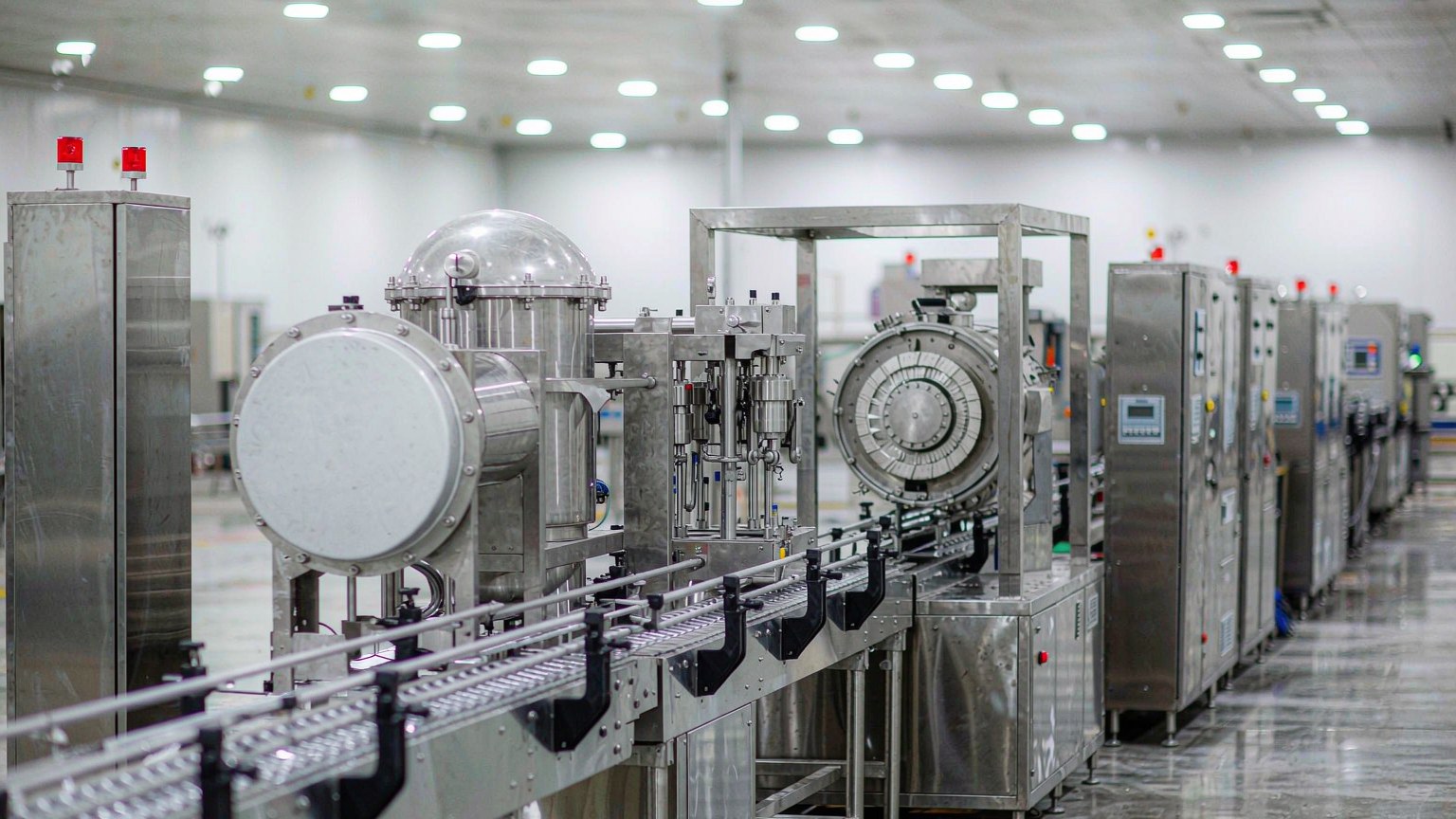
Automated liquid filling and sealing is one of those technologies whose importance is easiest to see in hindsight. Before it, packaging was a labour-intensive, variable process; after it, packaging became a controlled one. The change did not just make production faster. It changed what a mid-sized manufacturer could credibly promise a retailer.
The efficiency step change
The most visible effect is throughput. A single automated machine can process thousands of containers per hour with filling error held to a fraction of a percent, where manual and semi-automatic methods were limited by the pace and consistency of the operators. Automatic lines also compress the production cycle substantially and cut the labour required per unit, which is what allows a producer to absorb demand fluctuations without hiring.
Quality and safety, particularly where it counts
In pharmaceuticals, dairy and other high-hygiene categories, the closed filling architecture combined with cleaning-in-place and sterilisation-in-place circuits reduces the opportunities for contamination to enter the product — the contact points that a manual operation cannot eliminate. Precise sealing then protects what is inside for the whole shelf life. The measurable result is a sharp fall in quality complaints attributable to packaging, which is a cost saving as well as a reputational one.
Intelligence and resource use
The current generation of equipment is differentiated less by mechanics than by control. Vision inspection, flow sensors and connected modules let the machine monitor its own filling, reject non-conforming units automatically and generate production reports. At the same time, efficient motors and product-recovery systems reduce spillage and container loss, cutting both waste cost and carbon footprint — an area where packaging lines had historically been weak.
The structural effect on the industry
The least discussed consequence may be the most important. Automated filling lowered the capital barrier to large-scale, standard-compliant production. Companies that could never have justified a manual operation at scale can now run equipment that produces to the same standards as a major brand, which narrows the gap between challengers and incumbents and raises the baseline across the category. That in turn accelerates the harmonisation of packaging standards and specifications, because more producers are measuring to the same rules.
Looking ahead, the combination of flexible manufacturing and machine learning points toward equipment that adapts to many products in small batches — which opens the door to customised liquid products, from personalised beverages to small-batch pharmaceutical doses, at volumes that were previously uneconomic.
Need help specifying or upgrading a line?
Send us your product, format and target output per shift. We come back with a station sequence, the tooling list and an indicative price — no obligation.
