

Sauces and seasonings carry flavour that is easily lost. Aroma compounds are volatile, oils oxidise, and a weak seal ends the product before its date. Filling and sealing equipment is therefore not just a packaging step — it is part of how a recipe arrives at the consumer unchanged.
One machine, several filling principles
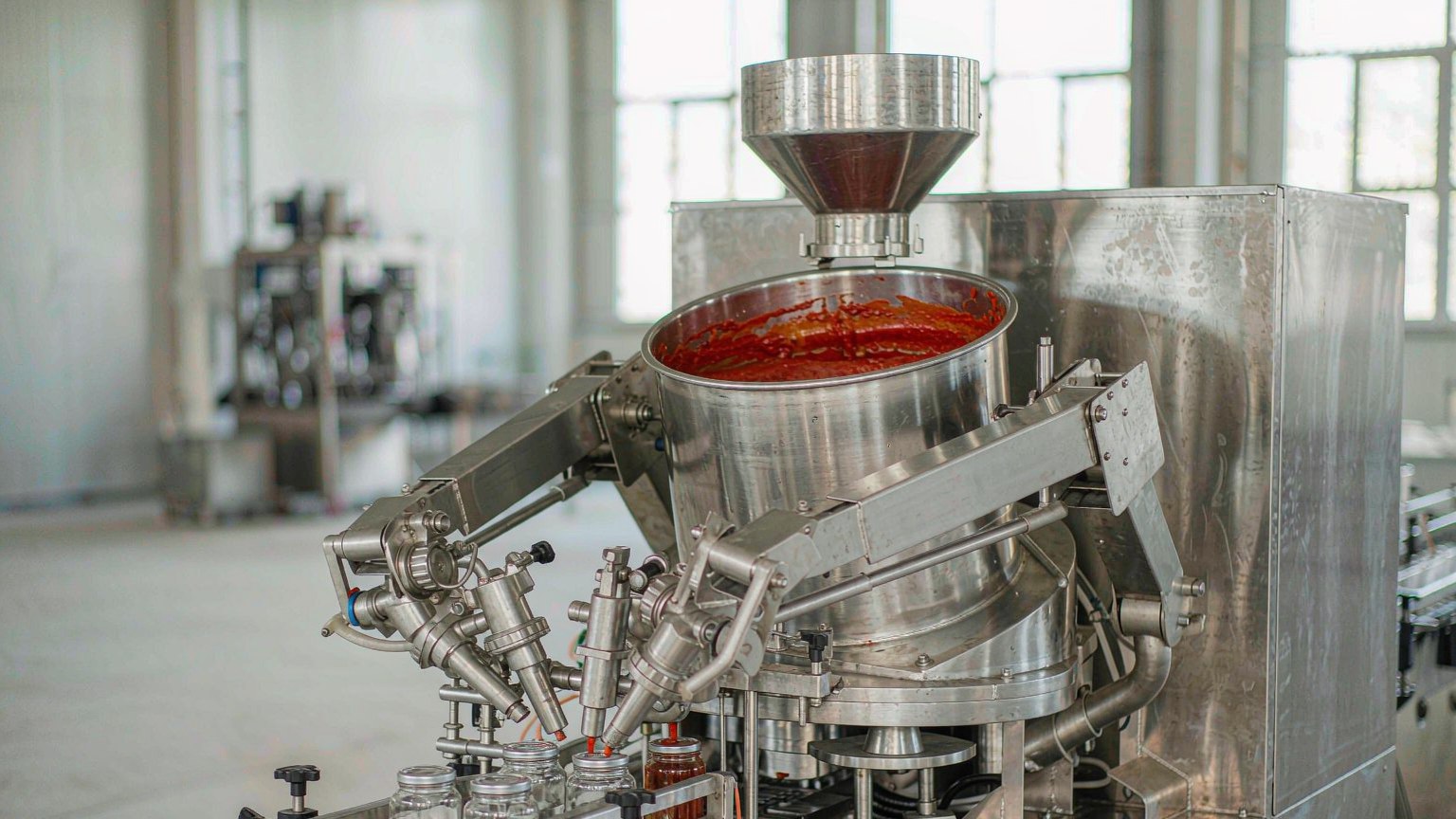
Seasoning products differ enough that a single filling method cannot cover them. For thin, pourable dressings and liquid seasoning, a flow meter or gravity filler measures the dose accurately. For heavy pastes such as bean sauce or salad dressing, the machine uses a rotor, piston or progressive-cavity pump system so that a thick product still moves through the pipework and still meters precisely. Where the recipe contains solids in suspension, the filling system also has to be gentle enough not to crush the particles or let them settle unevenly in the tank, which would change the product from one pack to the next. Closing follows the package: screw capping, heat sealing or snap-fit, chosen to form a barrier against oxygen and leakage.
Flavour is the reason for the specification
The value of automation here is time. A machine completes filling and sealing in a fraction of the time manual work takes, so the product spends less time exposed to air, and any volatile aromatic fraction has less opportunity to escape. Combined with nitrogen flushing or vacuum sealing, this slows the deterioration that shortens shelf life and makes a seasoning taste flatter in its second year than its first. The second benefit is production scale: modular machines can switch between the small consumer pack and the bulk catering pack quickly, so a producer can serve both markets from one line rather than investing twice.
Where salt, oil and acid attack the machine
Ingredients that protect the product from spoilage are hard on equipment. High salt content, oils and acids all stress packaging materials and seals, so the specification has to address corrosion resistance and seal reliability directly. Precise control of sealing temperature and pressure is what keeps the seam continuous and leak-free, and preventing leakage matters twice: it spoils the pack and it creates a contamination path. Stainless construction and a clean-in-place system reduce the labour needed to keep the machine hygienic, which is itself a food-safety control rather than a convenience.
Packaging change follows the machine
Seasoning packaging has moved from the glass bottle towards pouches, cups and squeeze bottles. That migration depends on filling and sealing equipment being able to handle flexible film and unusual formats, not only rigid glass. Lighter, more portable packaging cuts freight cost and material use as well as improving how the product is used — which is why the machine’s format flexibility now influences the packaging strategy of the brand, not just its production cost.
Need help specifying or upgrading a line?
Send us your product, format and target output per shift. We come back with a station sequence, the tooling list and an indicative price — no obligation.
