

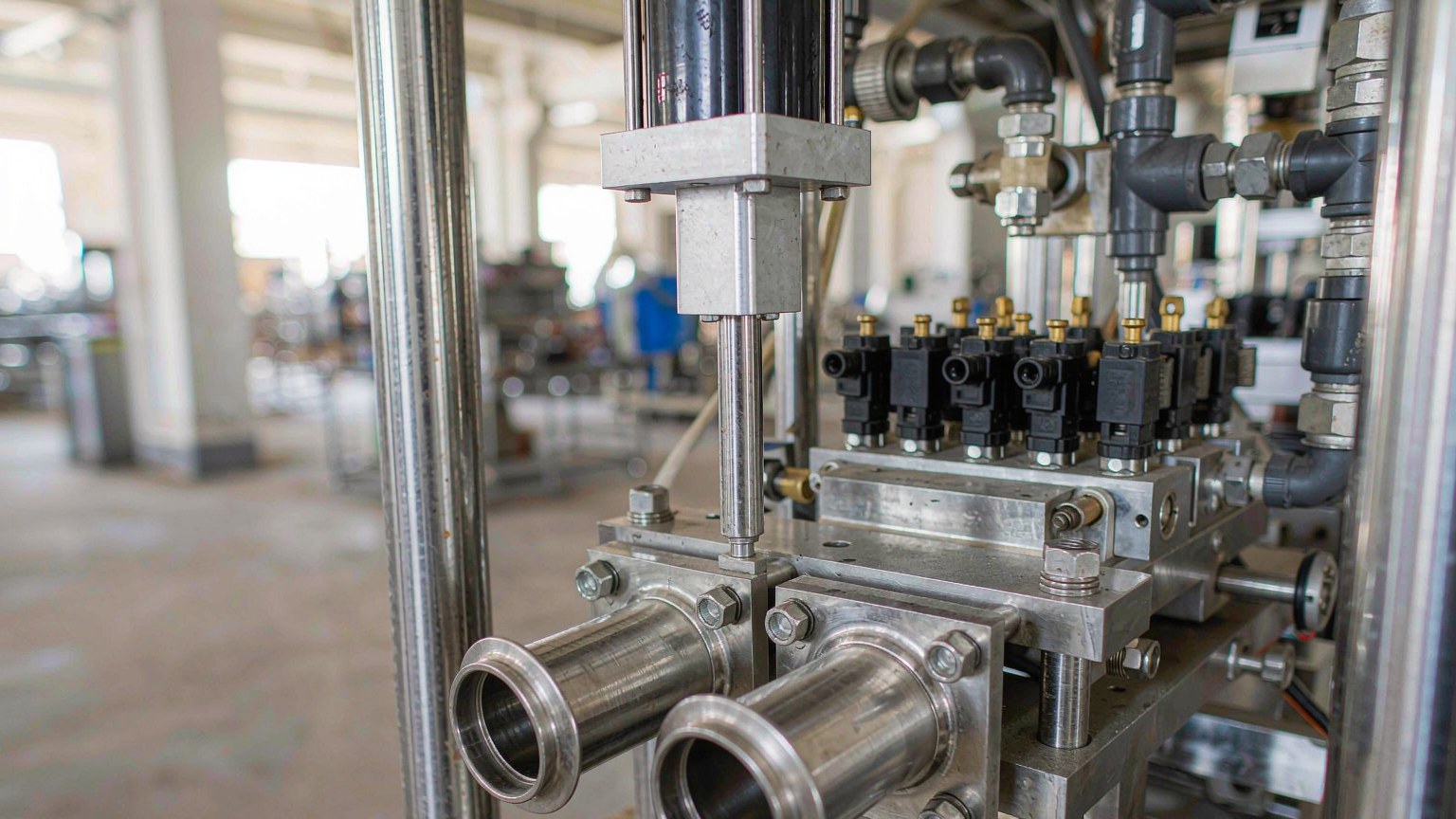
A granule packing machine fills granular products — confectionery, nuts, coffee beans, seasoning, pharmaceutical pills, feed pellets — into bottles, cans or bags, measuring the weight or volume of each dose and coordinating with conveying, sealing and labelling to complete the pack. It can operate as a stand-alone unit or as one station in an automated line, and it demonstrates a useful principle: packing performance is determined by how well the metering method matches the material.
The structure
Five subsystems make up the machine. The feeding system transfers material from the storage bin to the filling point, using equipment such as a screw feeder or a bucket elevator chosen for the material’s behaviour. The metering device measures each dose, using a volumetric cup, a weighing system, an electronic measurement arrangement or a screw, selected for the required accuracy and throughput. The filling mechanism then discharges the measured quantity into the container — its design is what determines whether material falls evenly or scatters and jams. A container locating system aligns the bottle or bag opening with the filling point precisely, which is what keeps the yield high, and the control system, a PLC with a touchscreen, handles parameter setting, automatic running and fault alarms.
Why producers automate
Speed is the first reason: automated filling outpaces manual work considerably and suits large-volume production, which shortens delivery lead times. Accuracy is the second, and it is arguably more important — high-precision weighing or volumetric measurement holds errors within about one percent, which prevents waste and makes the product consistent from pack to pack. Intelligent operation is the third: recipe selection, filling parameters and container type can be switched from the touchscreen, which makes running a varied product range practical rather than painful. Reliability is the fourth, in that modern machines are mechanically stable with low fault rates and straightforward maintenance, which lowers operating cost over time. And compatibility is the fifth: the machine adapts to a range of containers — glass bottles, plastic bottles, tinplate cans, aluminium cans and zipper bags — which is what lets one machine serve several products.
What to weigh when selecting
Match the metering method to the material rather than to the price. Uniform, free-flowing granules suit volumetric measurement, which is faster and cheaper; mixed or irregular materials need weighing, because only mass measurement copes with the variation. Then confirm the container range, the guaranteed accuracy at the smallest pack, the changeover time between formats and the cleaning method — the four figures that determine how much of the machine’s capability you will actually be able to use.
Need help specifying or upgrading a line?
Send us your product, format and target output per shift. We come back with a station sequence, the tooling list and an indicative price — no obligation.
