

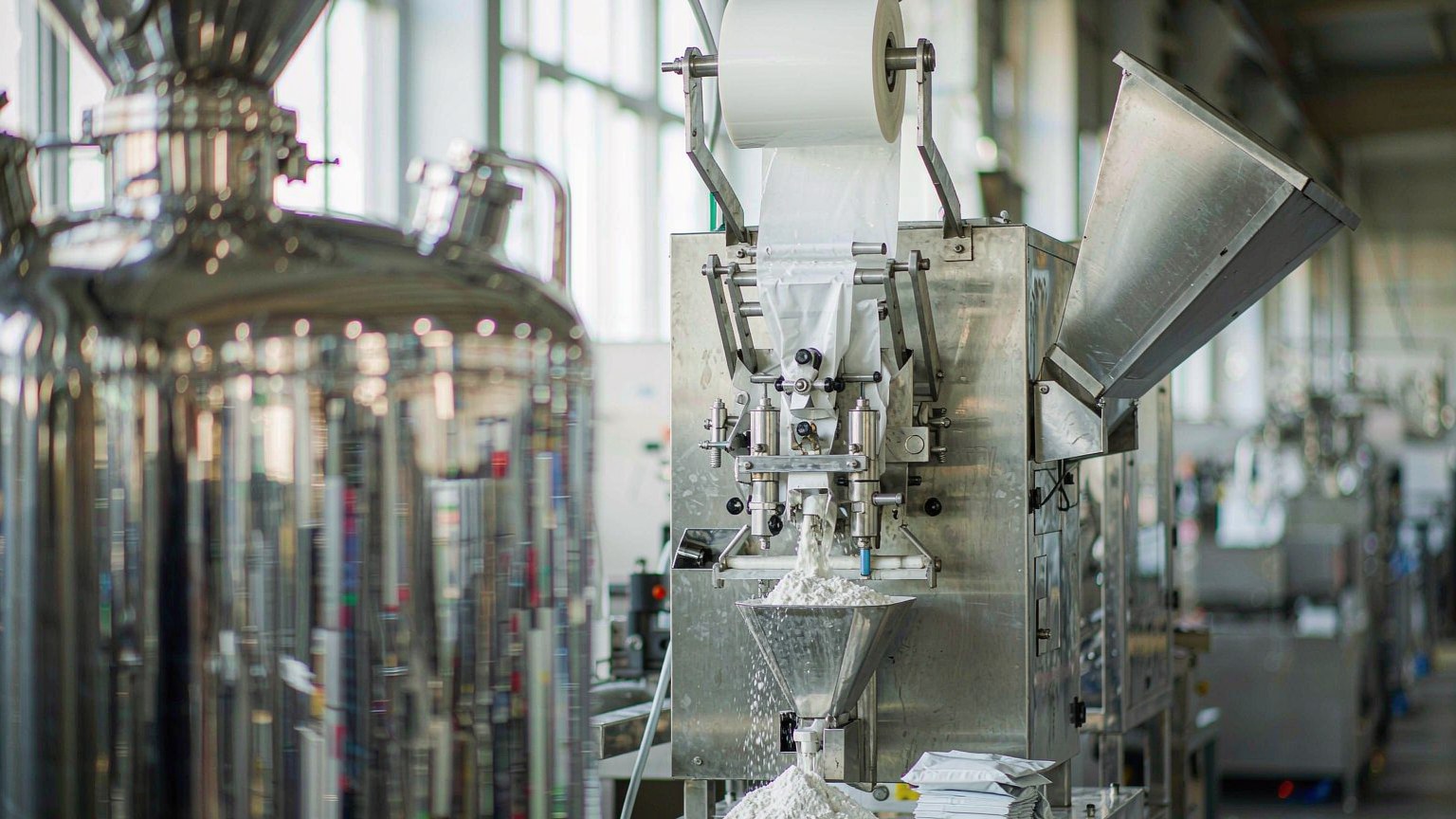
Granule filling and sealing machines serve food, pharmaceutical and chemical plants, and the maintenance they need follows a predictable hierarchy. Done on schedule, it extends equipment life, holds packaging quality and prevents the stops that wreck a production plan.
Daily
Cleaning comes first. After production, remove residual granules and dust from the machine’s surfaces and interior, because accumulation interferes with moving parts and eventually with the seal. Photocells and weighing modules should be cleaned with compressed air or a soft cloth — dust on a sensor reads as a signal error, and its effect on fill weight can be surprisingly large. Then lubricate the moving parts: guide rails, bearings and chains take a food-grade lubricant appropriate to the application. Finally, examine the sealing dies, clearing plastic fragments and granule residue from the die face and checking for wear, replacing or refurbishing as needed.
Weekly and monthly
At this level the work shifts from cleaning to verifying. Calibrate the metering system — whether it is a load cell or a volumetric mechanism — by running test fills and confirming that the weight error is inside the permitted tolerance, typically around one percent. Inspect the electrical system with the machine isolated: tighten terminals, since a loose connection produces intermittent faults that are difficult to trace, and confirm that the PLC and drive components are operating normally. Then test the safety devices deliberately. Emergency stops, guard door switches and overload protection should be actuated to confirm they work, not assumed to work because they have not yet been needed.
Annual, and seasonal
Wear parts have a service life and should be replaced on a plan rather than on failure: seals, belts and bearings all degrade with use. Once a year, carry out a deep clean by dismantling key modules — filling heads, conveyors — and attend to corrosion protection on steel components during the time they are open. If the control system supports it, this is also the moment to update software and adjust parameters to suit any change in the process or the product range.
Conditions and lay-up
Environment matters. In humid conditions, add moisture protection so that circuits do not short and steel parts do not corrode. In dusty environments, clean the cooling fans on a regular schedule, since a clogged fan leads directly to an overheating motor. And if the machine is to be idle for a long period, prepare it deliberately: empty the hopper, lubricate thoroughly and apply corrosion protection before putting it into storage.
A four-tier plan — daily, weekly or monthly, seasonal and annual — with a written record of what was done and which parts were replaced is the difference between a machine that quietly does its job for a decade and one that is always someone’s problem.
Need help specifying or upgrading a line?
Send us your product, format and target output per shift. We come back with a station sequence, the tooling list and an indicative price — no obligation.
