

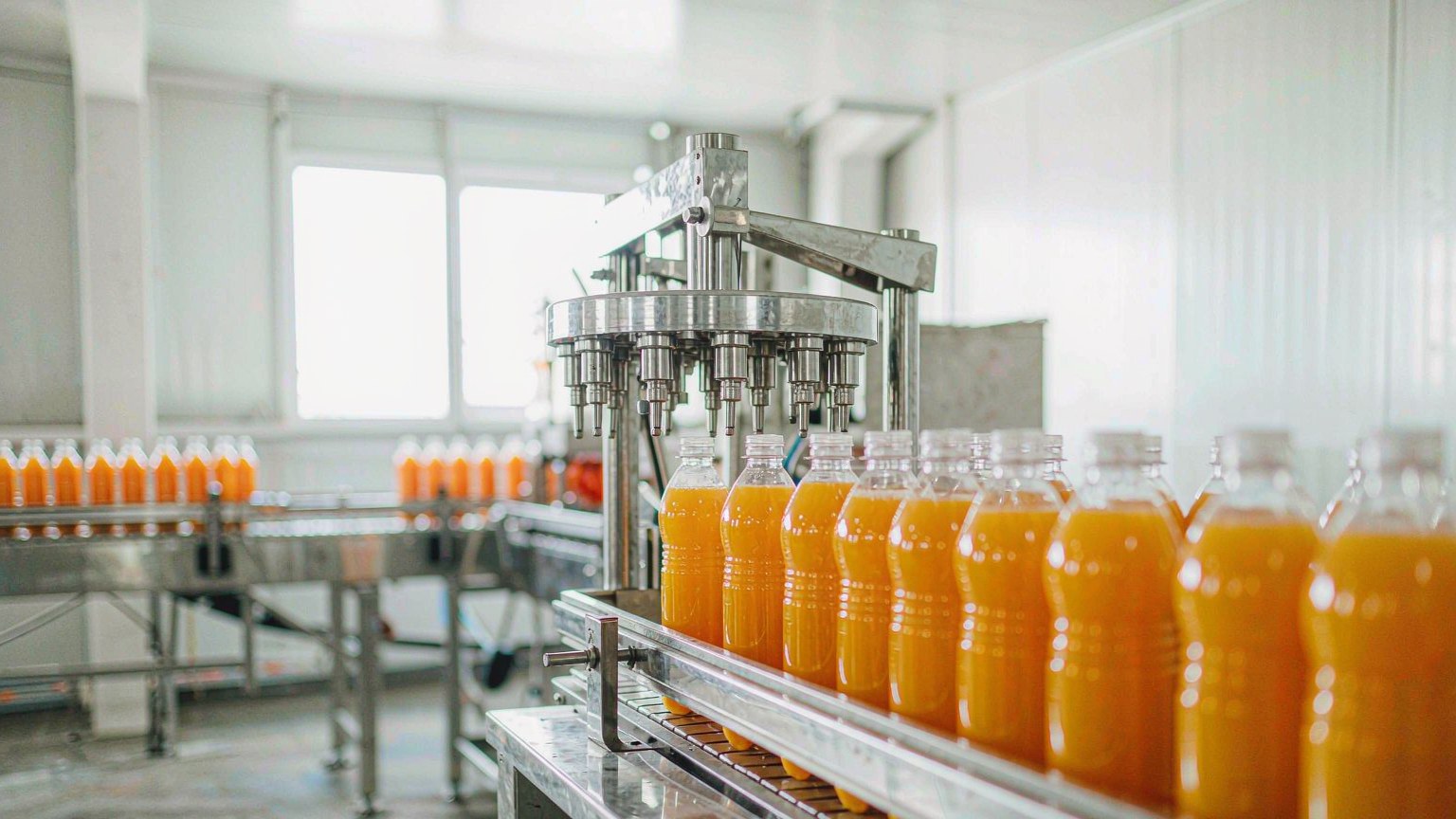
It is tempting to treat a filling and sealing machine as a container-filling device. That undersells it considerably. The capability to fill and seal beverages reliably at scale is one of the preconditions for the modern food industry as it exists, and its influence reaches in four distinct directions.
1. Scale, and the economics that follow
Before automated filling, beverage production depended heavily on labour and was therefore slow and limited in capacity. Automated lines — particularly high-speed fully automatic ones — made washing, filling, capping and labelling a single continuous process, and output rose by orders of magnitude. The immediate effect was a collapse in unit cost, which is what moved bottled water and soft drinks from occasional purchases to everyday commodities, and what made it possible to build the large consumer beverage businesses that now define the category.
2. Food safety as a controlled process
Packing is the most safety-critical step in the beverage chain. Aseptic cold filling and vacuum filling, combined with closures engineered for a reliable seal — consistent capping torque, correctly formed can seams — limit the product’s exposure to air and microorganisms, prevent recontamination and extend shelf life substantially. Accurate metering keeps both net content and formulation consistent. Without dependable filling and sealing, neither long ambient storage nor long-distance distribution of packaged drinks would be possible, and the modern distribution system would have no foundation.
3. Enabling products that could not otherwise exist
Technological capability has repeatedly created product categories. Aseptic filling made it feasible to produce preservative-free juices, teas and plant-protein drinks at scale. Hot filling into PET bottles enabled the bottled tea market to grow. Beyond specific technologies, the flexibility of modern equipment makes small-batch and customised production economically viable — different flavours, limited editions, seasonal packs — which is what supports the constant product iteration and market segmentation consumers now expect.
4. Pulling the supply chain with it
An advanced filling and sealing machine exerts force in both directions along the chain. Upstream, it drives packaging material suppliers — PET preforms, aluminium cans, aseptic cartons — toward tighter specifications and standardisation, because the machine can only perform if the packaging does. Downstream, it demands efficient logistics and warehousing, since a line producing thousands of units an hour requires distribution that can absorb them. Meanwhile, the current generation of equipment addresses resource use directly: optimised cleaning-in-place reduces water and chemical consumption, lower-energy drives reduce power draw, and accurate filling reduces product loss. Precision filling is, conveniently, both a cost measure and a sustainability one.
Need help specifying or upgrading a line?
Send us your product, format and target output per shift. We come back with a station sequence, the tooling list and an indicative price — no obligation.
