

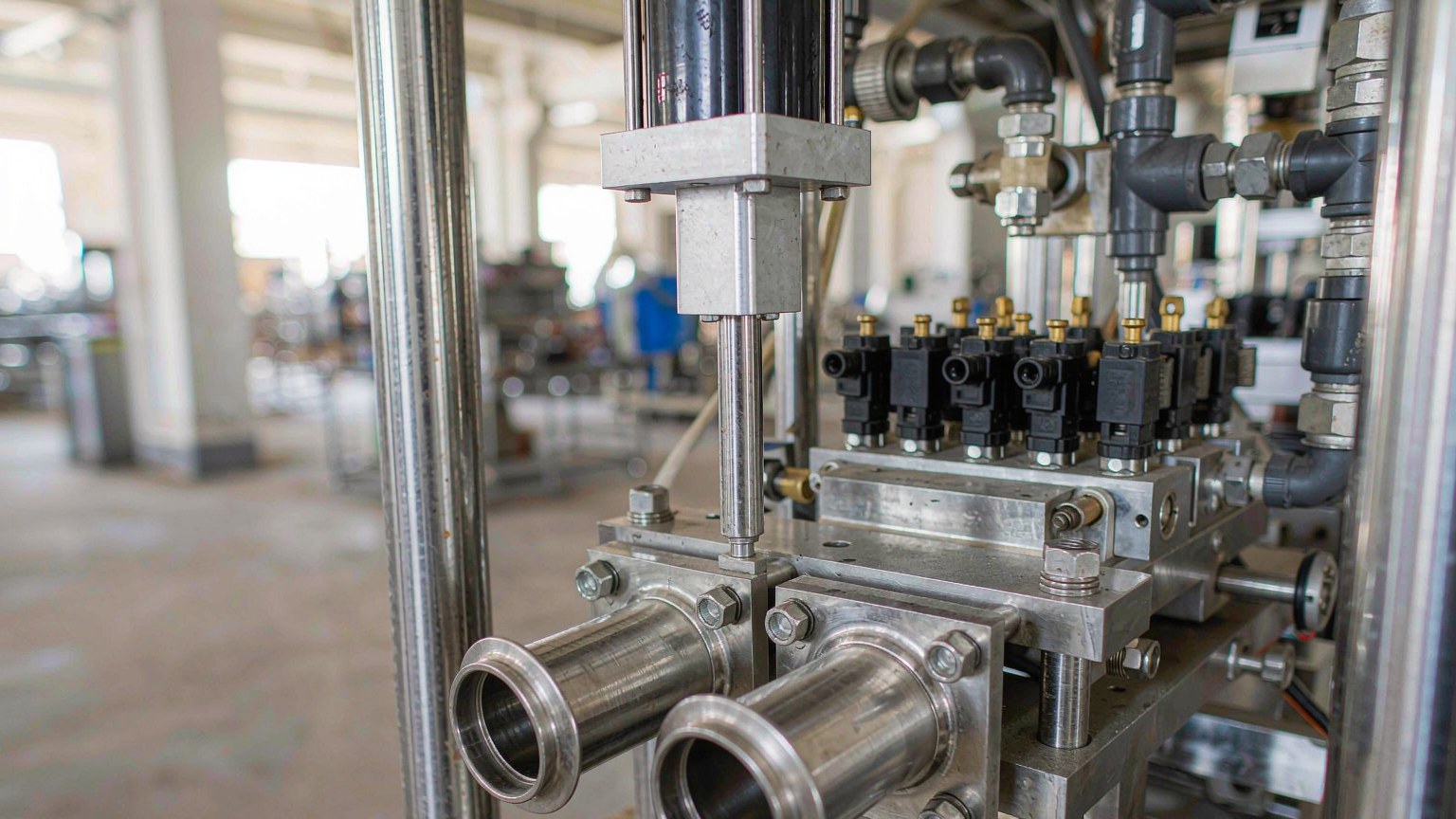
Automatic filling machines are now standard across food, beverage, pharmaceutical and personal care manufacturing, and the reasons are consistent. But each claimed advantage corresponds to a real engineering cost, and knowing which ones your production actually needs is how you avoid paying for capability you will never use.
Five performance arguments
Automation is the first: the machine completes filling, metering and sealing without operator intervention, which shortens the production cycle and raises output for high-volume production. Precision is the second, and it comes from servo drives and sensors that hold the fill within a preset tolerance for liquids, pastes, powders and granules alike — which is what makes product quality consistent rather than merely acceptable. Format flexibility is the third: the same machine handles large bottles and small sachets by adjustment rather than replacement, which matters to any business running a product range. Hygiene and safety form the fourth, since stainless construction, smooth surfaces and compliance with good manufacturing practice standards reduce contact between people and product. Reliability is the fifth, and the one most often underestimated: a machine rated for continuous operation keeps running through a heavy schedule, and the downtime it avoids is worth more than the speed it claims.
Where the demand comes from
Food and beverage accounts for the largest share, because drinks, condiments, dairy products and juices need high speed together with accurate dosing and a reliable seal, across a range of bottle and pouch formats. Pharmaceuticals and cosmetics come next, and there the driver is precision rather than speed: a deviation that would be irrelevant in a beverage is a quality failure in a medicine, and cosmetic products packaged in tubes and bottles need both accuracy and flexibility. Household and chemical products — detergents, lubricants, cleaning agents — add the requirement to handle a wide viscosity range without dripping or contamination.
Selecting one
Start from the product and work outward. Define the viscosity and behaviour of the material, because that determines the dosing principle and there is no way to compensate for getting it wrong. Define the container range and closure type. Define the output you need in steady state, not at peak. Then compare machines on the specification that will be measured every day: guaranteed filling accuracy, changeover time between formats, cleanability, and the maintenance schedule. Ask for those four in writing. A machine that performs well on all four is usually also competitive on price, because it was designed around a clear brief rather than a long feature list.
Need help specifying or upgrading a line?
Send us your product, format and target output per shift. We come back with a station sequence, the tooling list and an indicative price — no obligation.
