

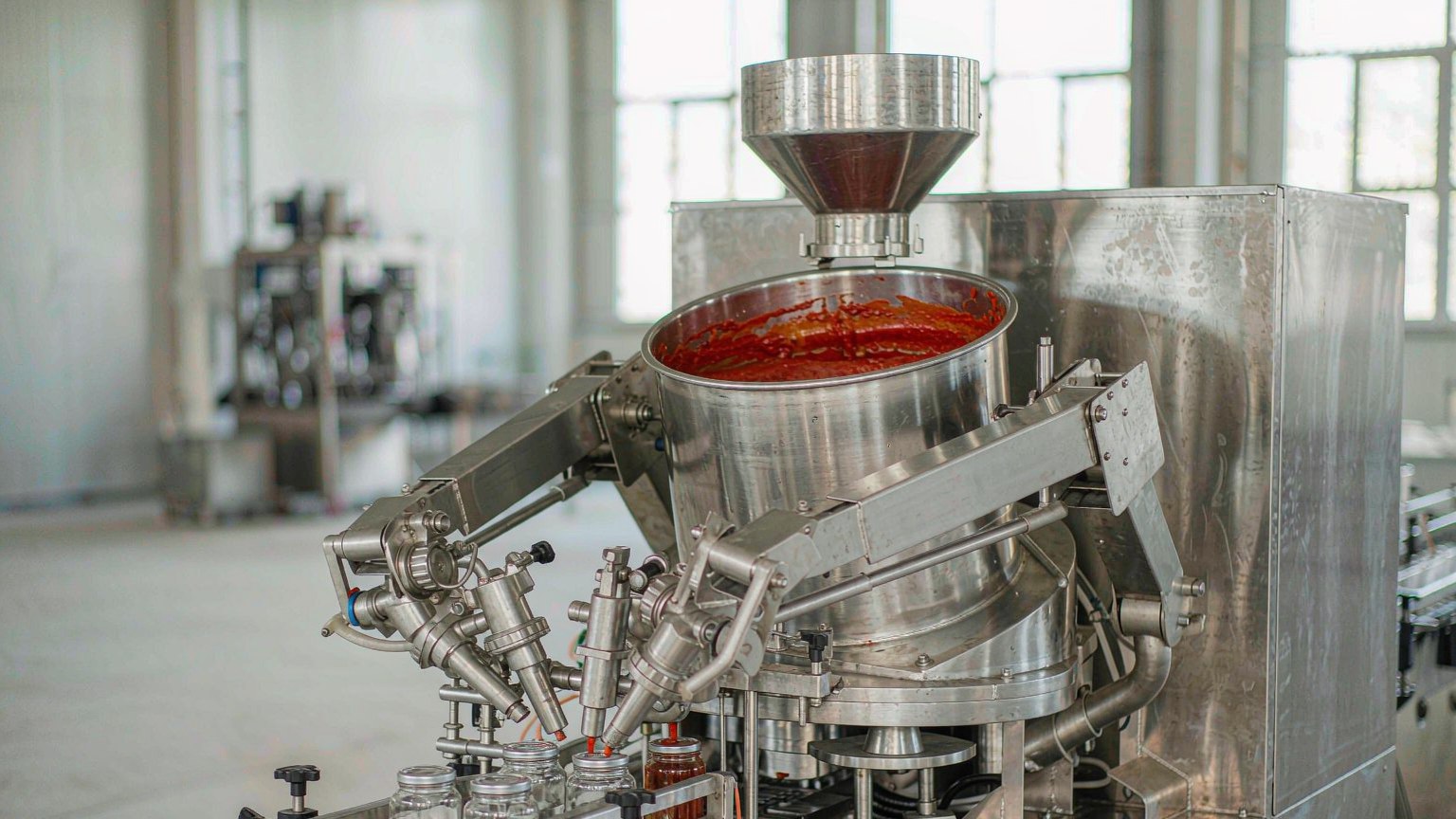
Paste products span an odd range of bedfellows: cleansers, hand cream and toothpaste on one side; ketchup, mayonnaise and peanut butter on the other. What they share is rheology. They are thick, they are sometimes thixotropic, and they frequently string or tail when they are cut off. Those properties produce three specific and persistent packaging problems.
Problem one: accuracy
Before dedicated paste fillers, most of this product was dosed by hand or with simple pneumatic devices. A same-batch variation of five percent between units was normal, and on a high-value cream or a regulated food product that variation is both a cost and a compliance risk. Modern machines drive a piston or rotary-lobe pump with a servo motor and pair it with a positive cut-off at the nozzle. That combination holds dosing accuracy within roughly half a percent, which lets a producer both control raw material cost and defend the declared net content on every unit.
Problem two: dripping and stringing
A viscous product does not stop cleanly when the valve closes. It drips, or it draws a tail. Either behaviour fouls the container rim and, if the container is then sealed, the contamination becomes a seal defect. Machines address this with nozzle geometry designed for the product, a suction or snuff-back function at the end of the dose, and correct nozzle positioning relative to the container neck. The result is a clean rim and a seal that has nothing in the way of it.
Problem three: seal reliability
Tubes and plastic bottles are the usual containers, closed by heat sealing, ultrasonic welding or screw capping. Integrating filling and sealing on one machine means the pack is closed immediately after filling, before product can migrate into the sealing zone, and an in-line leak check can verify every unit rather than a sample. For toothpaste and medicated creams, where moisture ingress directly affects shelf life, that verification is the difference between a controlled process and a hopeful one.
What it means for the market
Reliable, affordable paste filling equipment has had a structural effect: mid-sized personal care and food businesses can now achieve packaging quality that was previously only available to large brands with the budget for a premium line. The result is more competition, more small innovative brands, and a higher baseline for product presentation across the category. Modern machines also come with quick-release tooling and cleaning-in-place connections, which shortens the changeover between recipes — a real advantage for producers running several flavours or formulations on one line.
Paste packaging is not glamorous, but its three problems are exactly the ones that generate complaints and write-offs. Solving them is what turns a good formulation into a sellable product.
Need help specifying or upgrading a line?
Send us your product, format and target output per shift. We come back with a station sequence, the tooling list and an indicative price — no obligation.
