

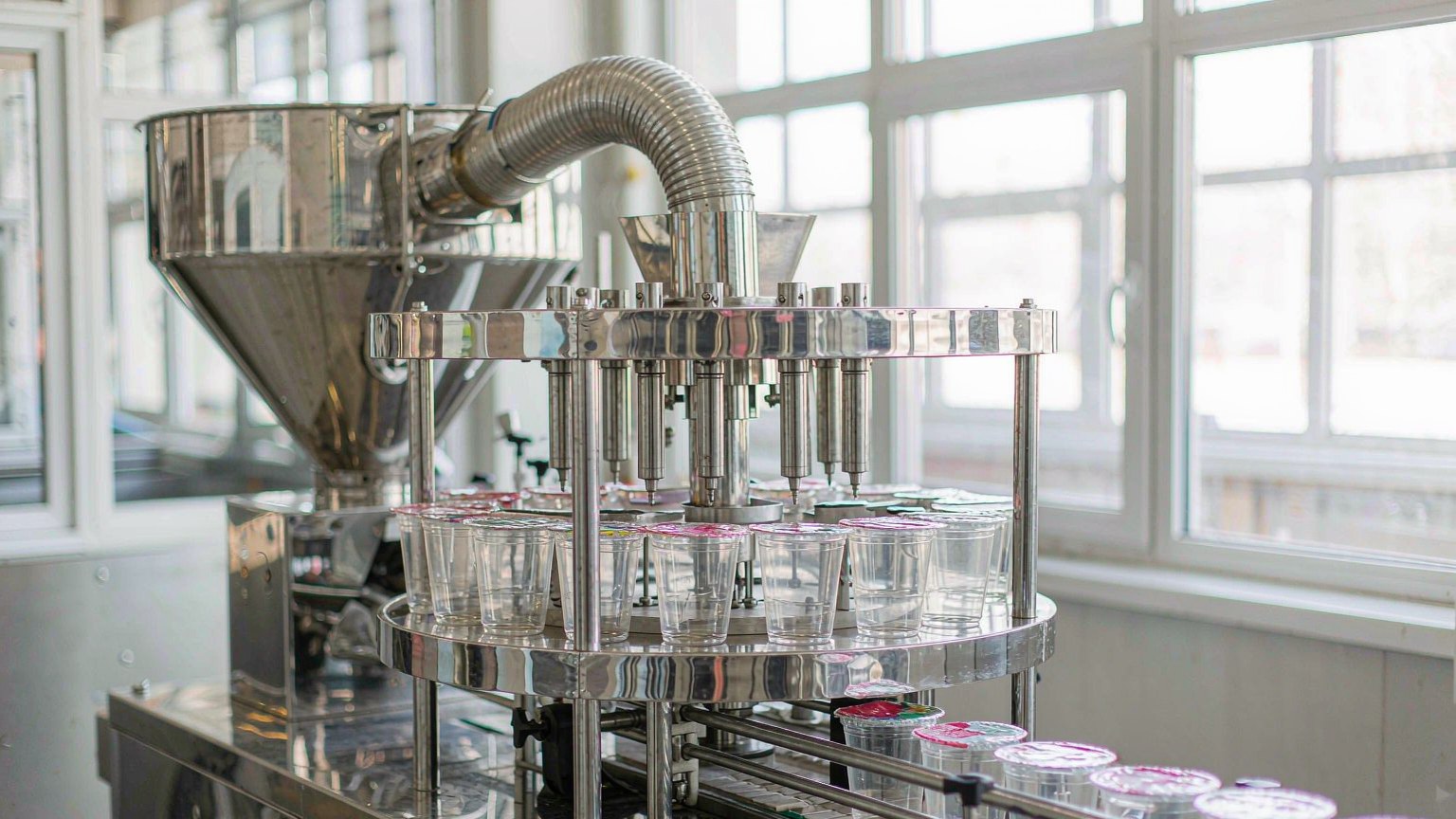
For a cold-drink producer, the cup filling and sealing machine is not a peripheral purchase. It governs how many cups leave the plant per hour, how consistent they are, and how much of the cost base is tied up in maintenance and downtime. Choosing well means working through five questions in order.
1. What output do you actually need
Start from volume, not from the specification sheet. Estimate daily production and, separately, the peak you must survive in summer. Also decide the product type — pure ice, slush, or mixed drinks — and the cup formats you intend to run. As a rough rule, a small operation is well served by a semi-automatic machine in the low thousands of cups per hour, while an established producer feeding retail or events should be looking at a fully automatic line capable of several thousand cups per hour and above. Whichever band you land in, confirm the machine can grow with you: an output ceiling that arrives eighteen months too early is an expensive lesson.
2. Temperature, pressure and film control
Cold products place specific demands on the sealing stage. Look for temperature control that holds setpoint within about one degree, stable pressure regulation through the sealing cycle, and reliable film tension control so the lid sits flat and seals evenly. Weak film tension produces wrinkles and leaks; excessive tension stretches the film and weakens the bond.
3. Materials and components
Food-grade 304 stainless steel is the sensible baseline for contact parts. Beyond the frame, look at the components that fail first: pneumatic valves, sensors and the controller. Established, well-documented components make field service faster and spares easier to obtain, which matters more than a marginal difference in purchase price.
4. Cleanability, operation and energy
Ice and syrup leave residue that has to come off daily. Check that the cup path, sealing head and product lines can be opened up without tools, and that the control interface is understandable to a shift operator rather than only to the commissioning engineer. Ask for the connected load and expected consumption, because a machine that runs every day for years turns a small efficiency difference into a large bill.
5. The supplier
Finally, look past the machine to the company behind it. A service network that reaches your site, a guaranteed spares supply and a documented response time are worth real money. Before signing, visit the factory if you can, watch the machine run on a product close to yours, and ask for sample cups to test for seal integrity after chilling. A supplier confident enough to hand over samples is usually the one still answering the phone in year three.
Need help specifying or upgrading a line?
Send us your product, format and target output per shift. We come back with a station sequence, the tooling list and an indicative price — no obligation.
