

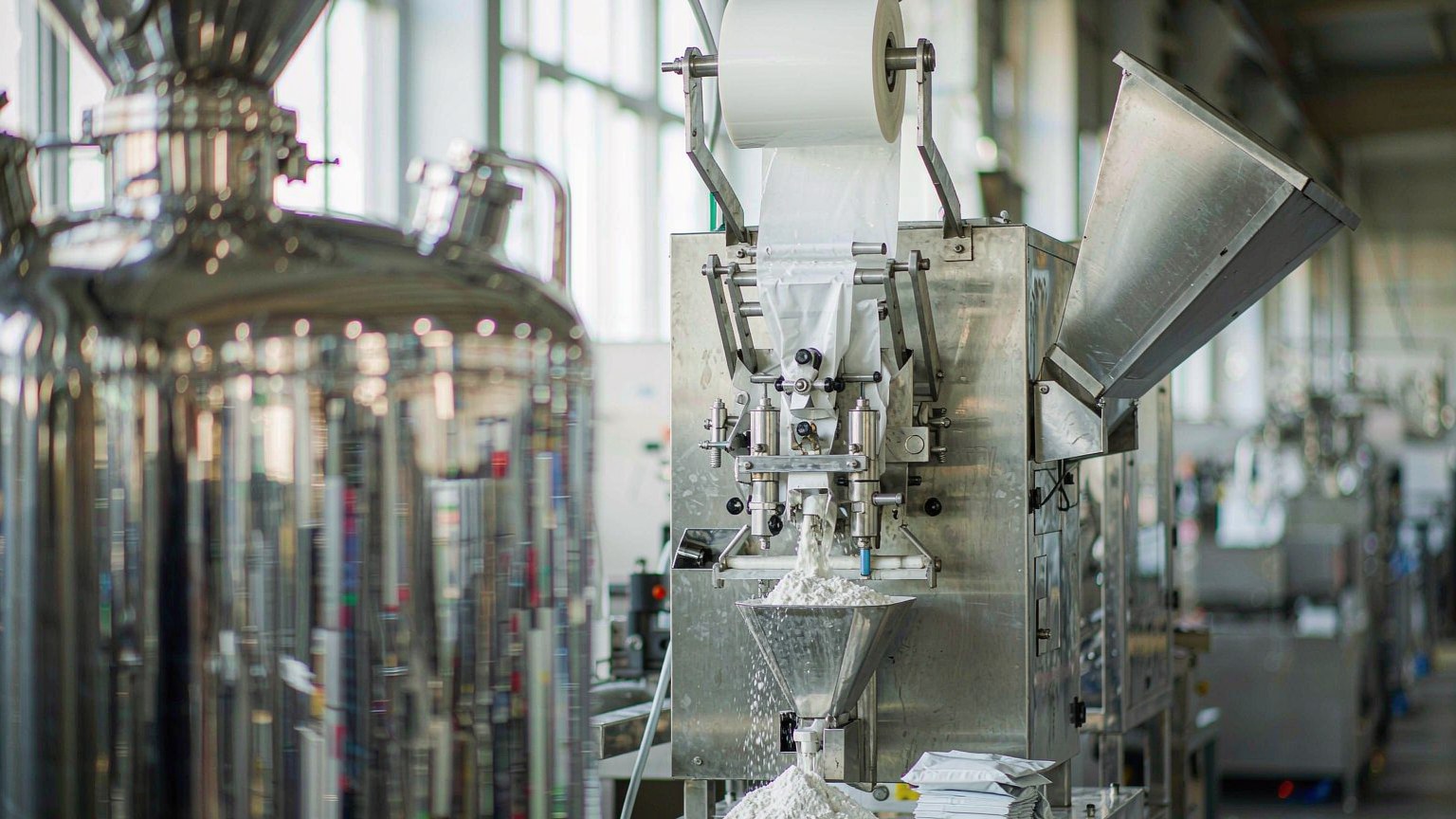
Flour looks like a simple product to pack and behaves like a difficult one. It becomes airborne at the slightest disturbance, it settles into a denser mass the longer it sits, and it absorbs moisture from any humid air it meets. Manual bagging copes with those properties only at small volume. Beyond that, an automatic flour packing machine is what keeps weight accurate, dust contained and product dry.
What the machine does
The core sequence is straightforward: weigh, fill, seal. Electronic weighing controls the dose; a screw or auger feeder delivers it into the bag; a clamping arrangement holds the bag steady while it fills; and a sealing or sewing station closes it. A PLC with an HMI coordinates the sequence and lets the operator select a recipe for each pack size rather than re-setting the machine mechanically.
Why automation pays
Weight accuracy is the first return. An electronic weighing system holds each bag to a tight tolerance, which removes both giveaway (over-filled bags given away for free) and the compliance risk of under-filled ones. Dust control is the second: enclosing the fill point and extracting the displaced air protects both worker health and the environment, and it keeps airborne flour out of nearby machinery. Labour is the third. A single operator can supervise a machine that replaces several manual stations, and the machine does not tire toward the end of the shift.
Where it is used
Mills and grain processors are the obvious users, but the same machine appears wherever flour is an input: bakeries, noodle and pasta plants, snack manufacturers, and agricultural traders preparing product for export. Export work adds a requirement of its own, since bag weights, labelling and closure standards differ by destination market, and the machine has to be able to meet all of them.
Specifying one
Work from the product, not the brochure. Confirm the bulk density of your flour, because it varies between wheat types and between fresh-milled and settled product, and the dosing system must be sized for the lowest density you will run. Define the full bag range. Check the dust-extraction arrangement and where the extracted air goes. Ask for the guaranteed weight accuracy per bag size, and ask how the machine is cleaned between allergenic and non-allergenic products — in flour plants that question is a compliance issue, not a housekeeping one.
Where the technology is going
Smart sensors now monitor weight drift, film tension and machine load, flagging a developing problem before it becomes a rejected batch. Energy efficiency is being designed in through servo drives and right-sized motors. Modular construction lets a plant add a second filling head or change sealing technology without replacing the frame. And as flour trade globalises, machines increasingly need to be configured to several regional standards at once.
Need help specifying or upgrading a line?
Send us your product, format and target output per shift. We come back with a station sequence, the tooling list and an indicative price — no obligation.
