

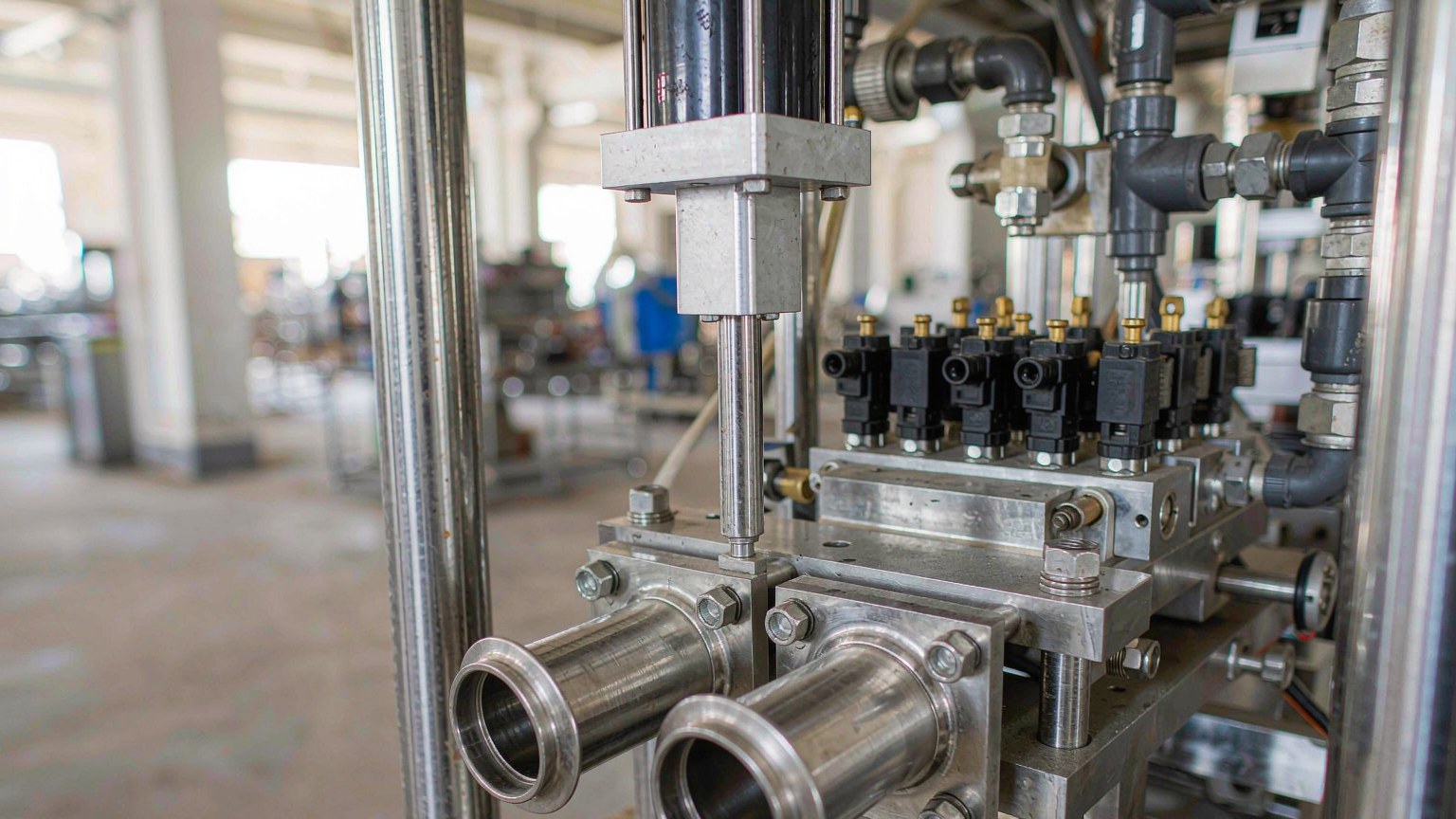
Every bottled drink passes through the same two operations: a measured volume goes in, and the package is closed so nothing gets out. Everything else — the hydraulics, the sensors, the software — exists to make those two steps fast, repeatable and safe. Understanding how the machine does it is the fastest route to specifying one properly.
Filling: the principle follows the liquid
Low-viscosity products such as water and clear juice are usually filled by gravity or at pressure, with valve timing and head pressure setting the volume. The engineering problem here is drip and foam control, which becomes critical on carbonated products where turbulence drives dissolved gas out of solution. Viscous and particulate products — yogurt drinks, juices with pulp, sauces — need piston or screw fillers that displace a fixed volume and handle the product gently enough not to break its structure.
Holding accuracy
Modern high-end fillers close the loop with flow meters and servo control. The meter measures actual flow, the controller adjusts the valve in real time, and the machine compensates for temperature, viscosity drift and pump wear as they happen. That is how manufacturers quote filling accuracy within a millilitre across a shift rather than across the first hundred bottles.
Nitrogen dosing and shelf life
Before the container is closed, a nitrogen purge displaces the oxygen in the headspace. It is a small addition with a large effect on oxidative shelf life in juices, teas and functional drinks, and it is one of the least expensive quality upgrades on a beverage line.
Sealing: closure type and torque
Closure choice follows the container. PET bottles take screw caps, where torque control is the whole game — too little and the pack leaks in transit, too much and the tamper band or the neck thread is damaged. Beer and glass soft drinks use crown caps crimped onto the neck finish against an internal gasket. Cartons and plastic cups are sealed by heat or ultrasonic bonding so the material fuses to itself.
The aseptic envelope
For ambient-shelf-life filling, the sealing zone is kept under positive-pressure sterile air, with periodic hydrogen peroxide or UV treatment, so that microorganisms cannot enter in the moment between filling and closing. The seal is only as aseptic as the environment it is made in.
From mechanism to instrument
Today’s machines carry vision systems that photograph fill level, cap orientation and label position and eject defects automatically; CIP circuits that clean every valve seat without dismantling; and sensors that stream temperature, pressure and speed to a cloud dashboard for predictive maintenance. A bearing that is starting to fail shows up in the data long before it stops the line.
The practical question for a buyer is not which of these features exists, but which ones your product and labour reality will actually use.
Need help specifying or upgrading a line?
Send us your product, format and target output per shift. We come back with a station sequence, the tooling list and an indicative price — no obligation.
